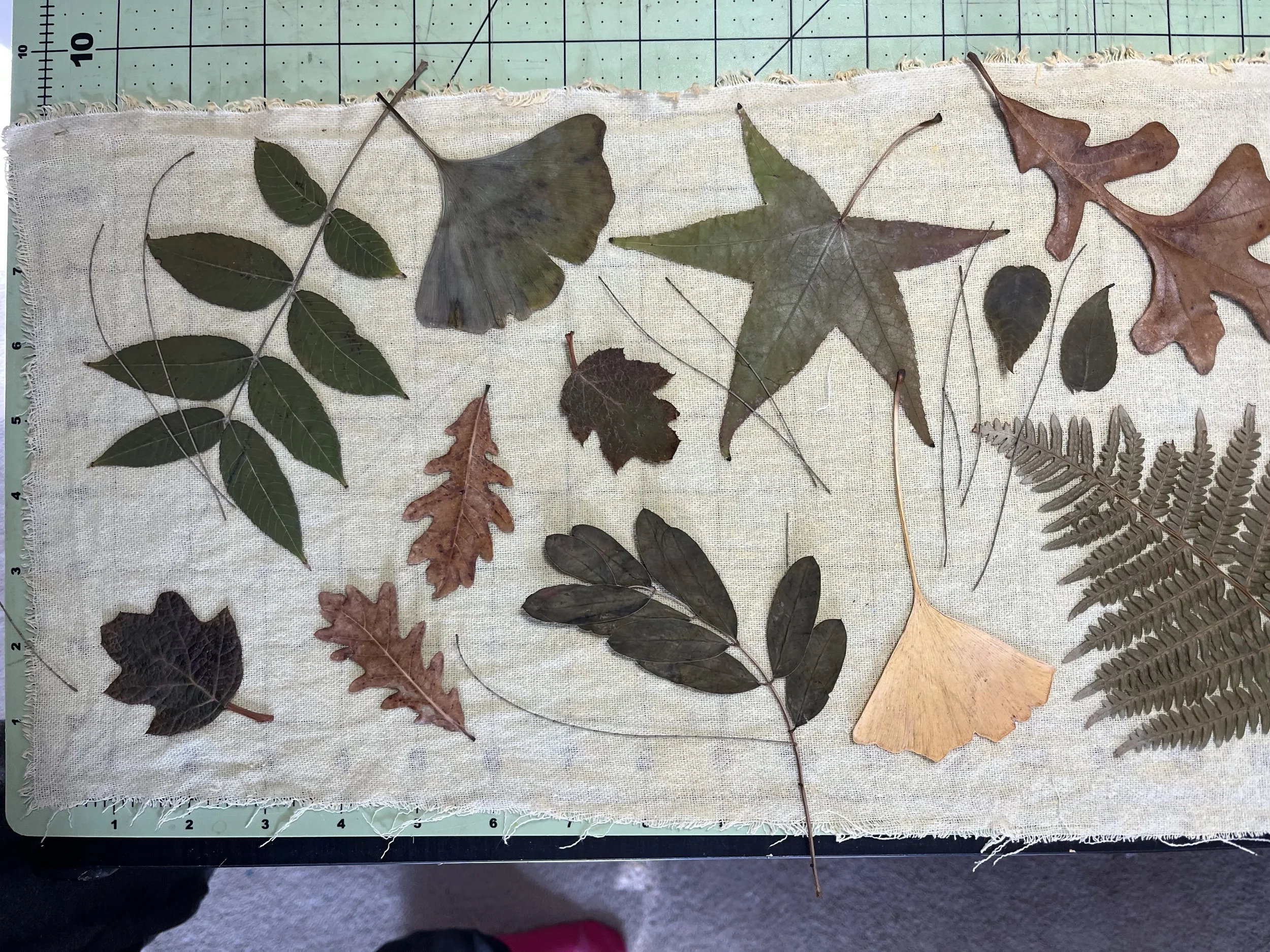
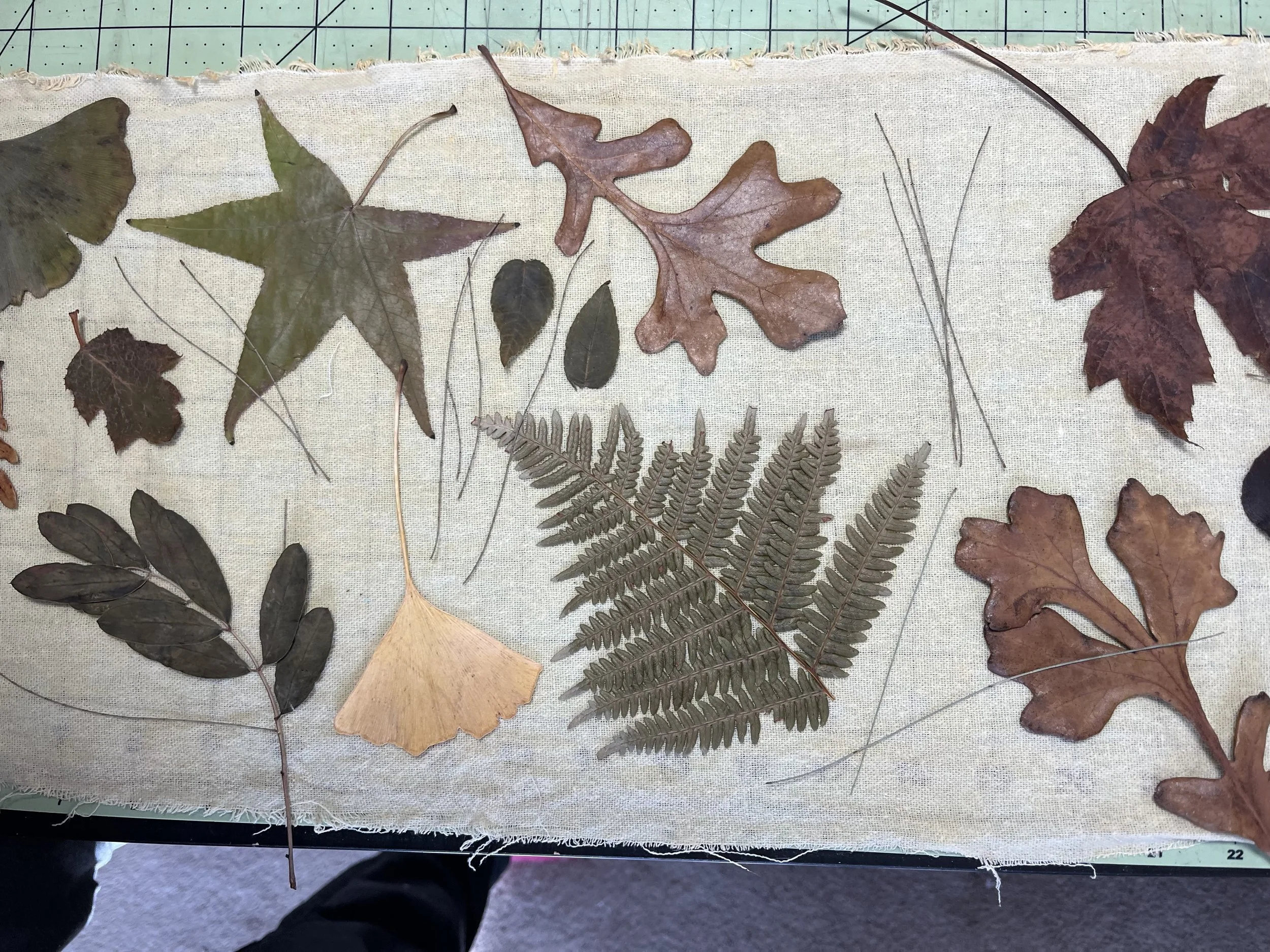
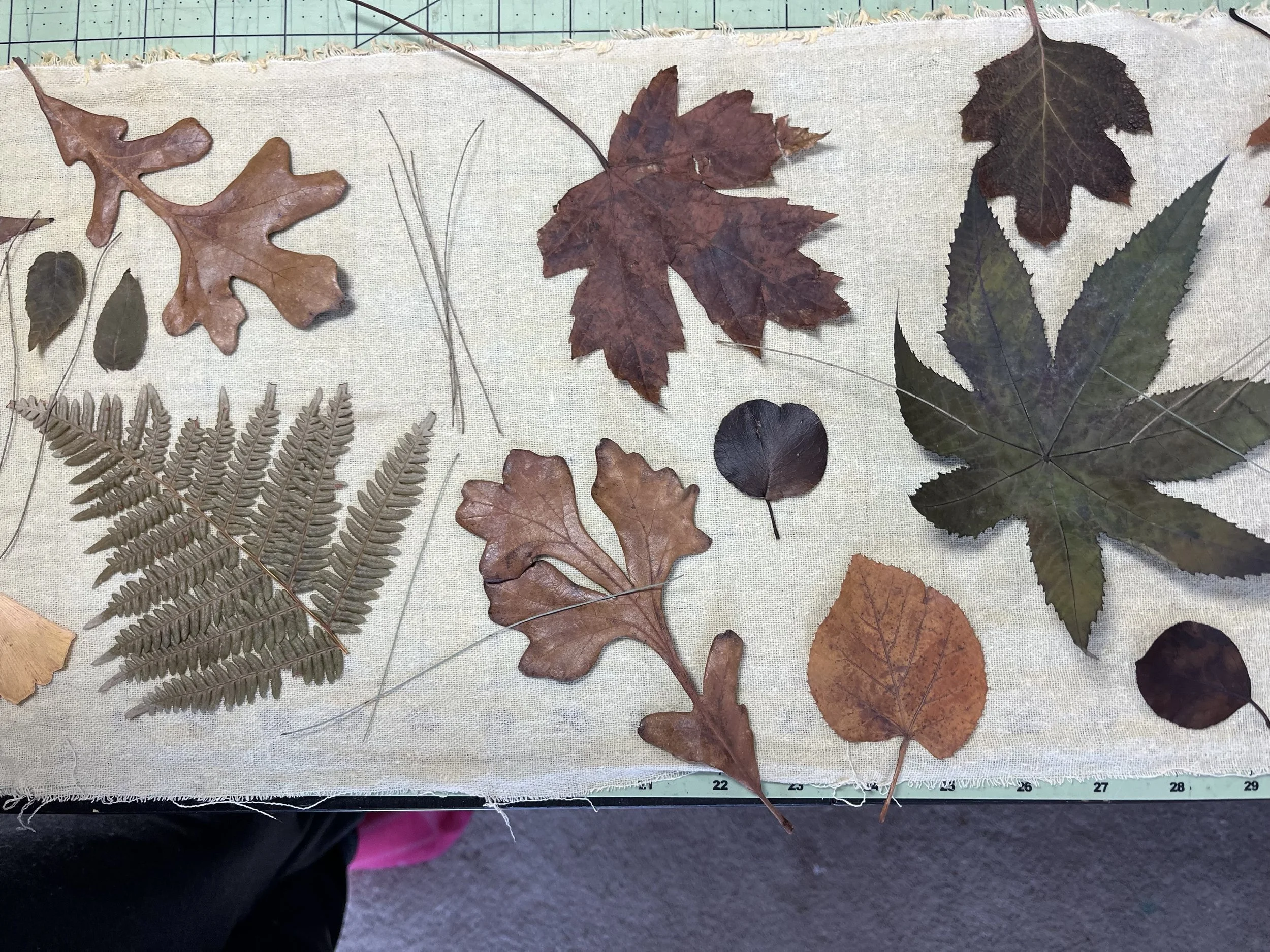
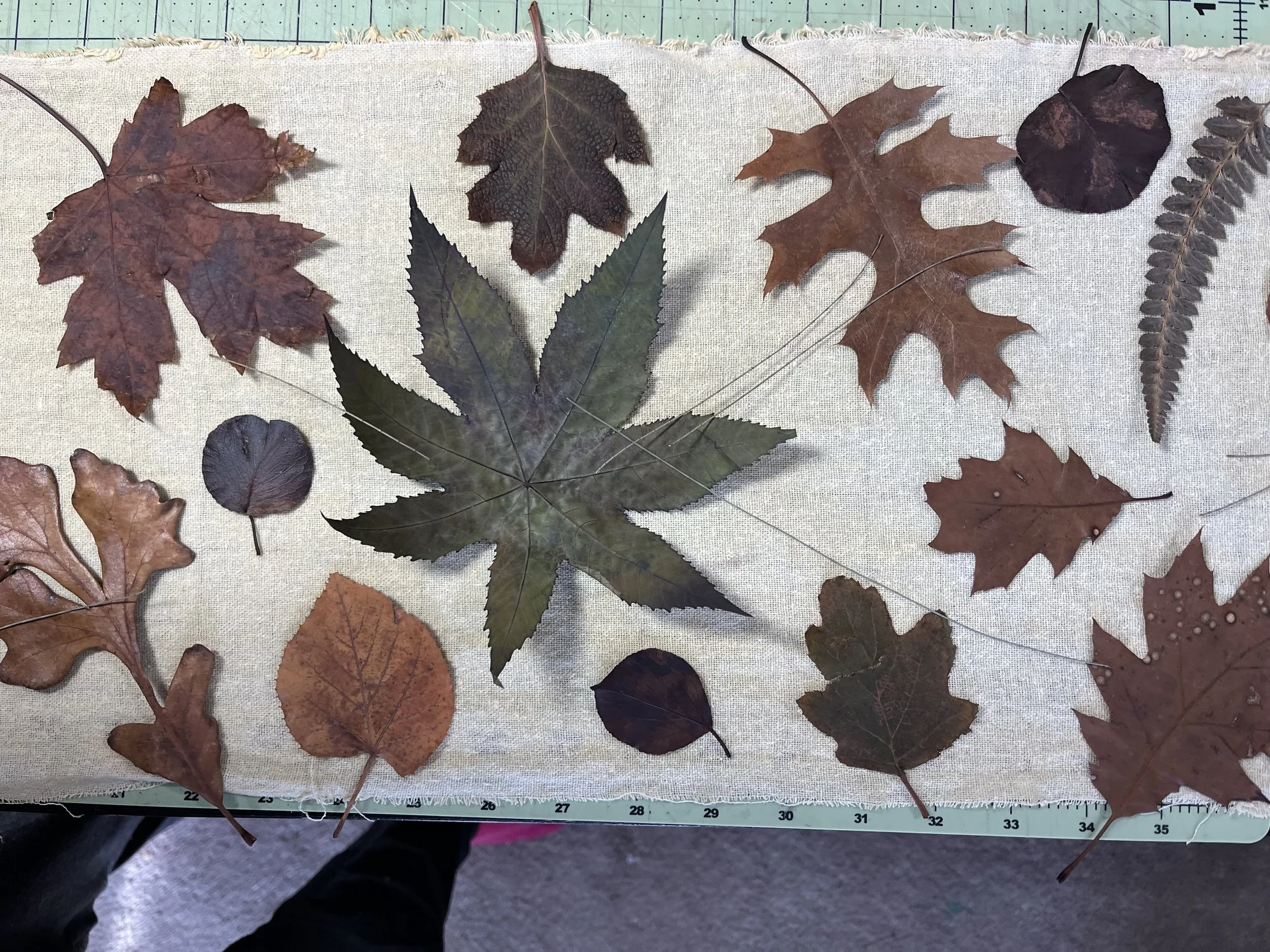
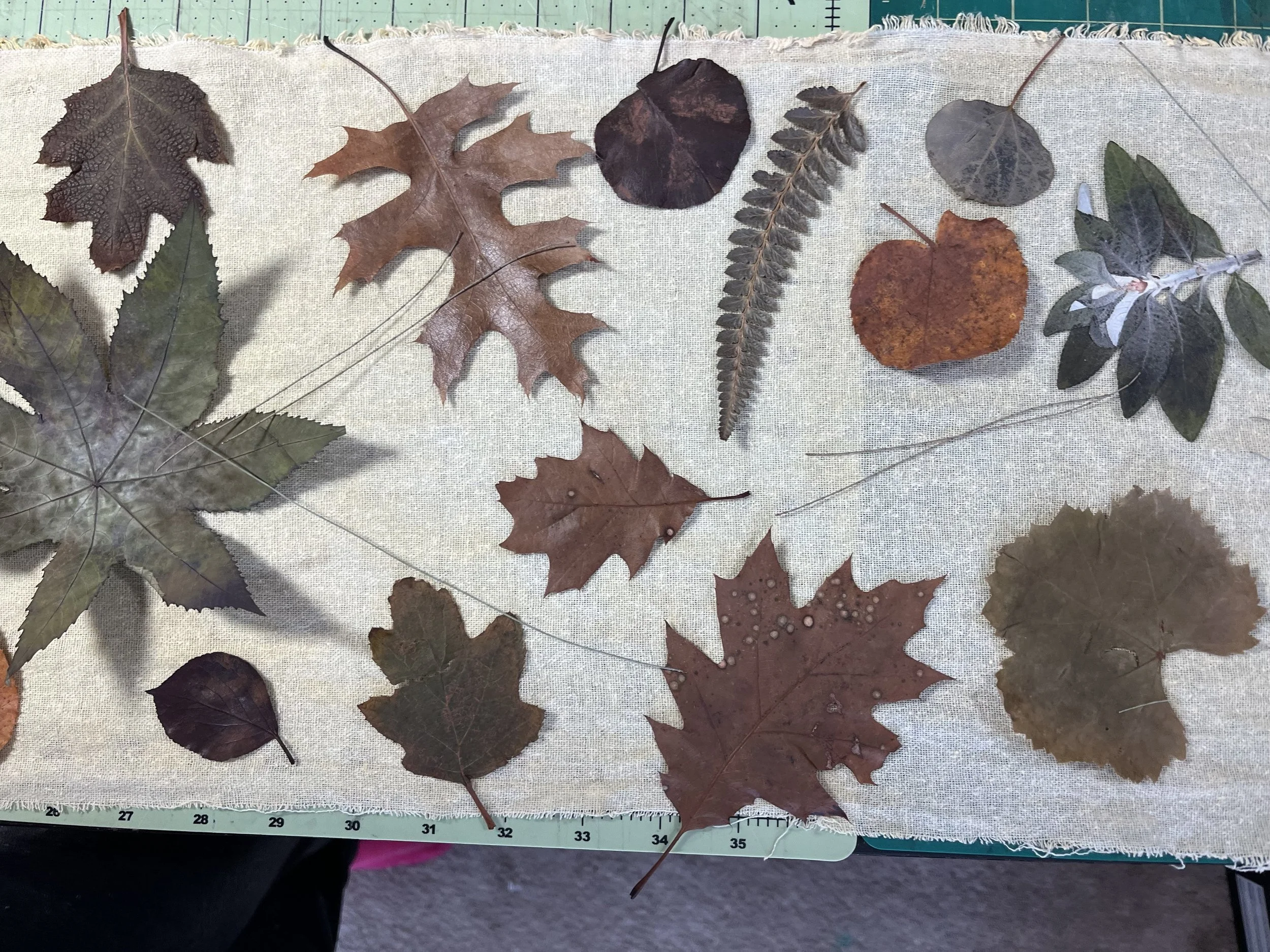
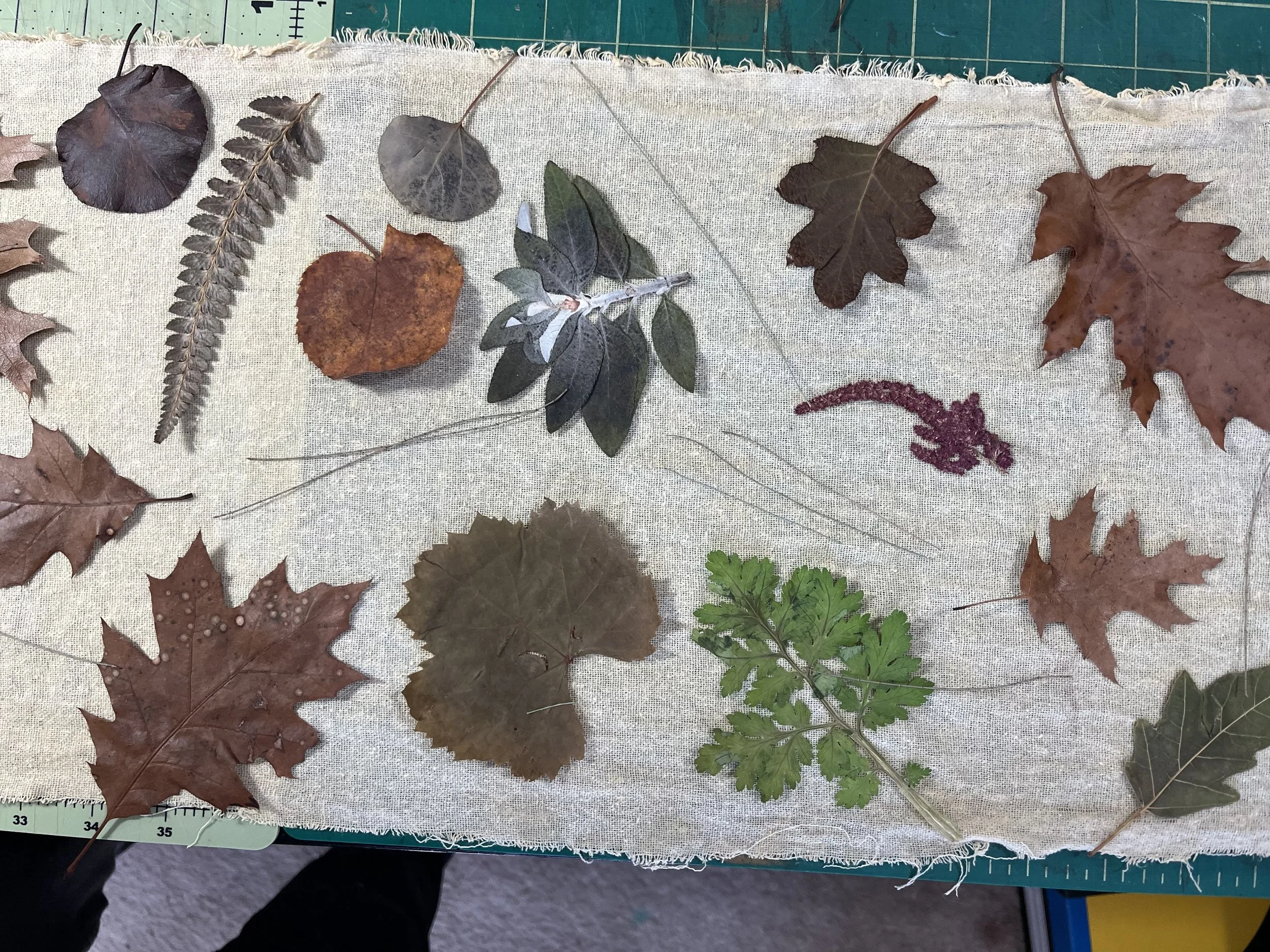
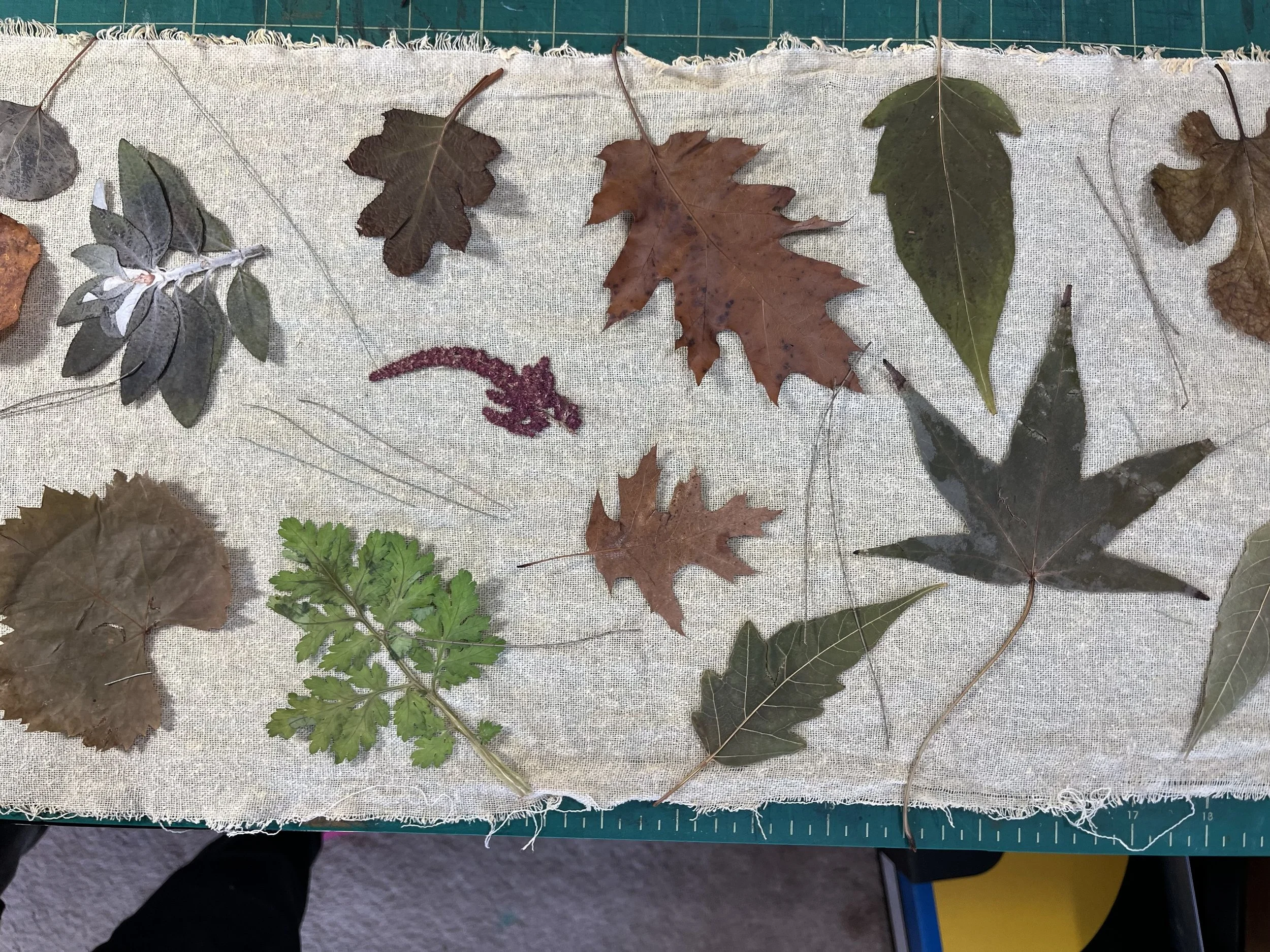
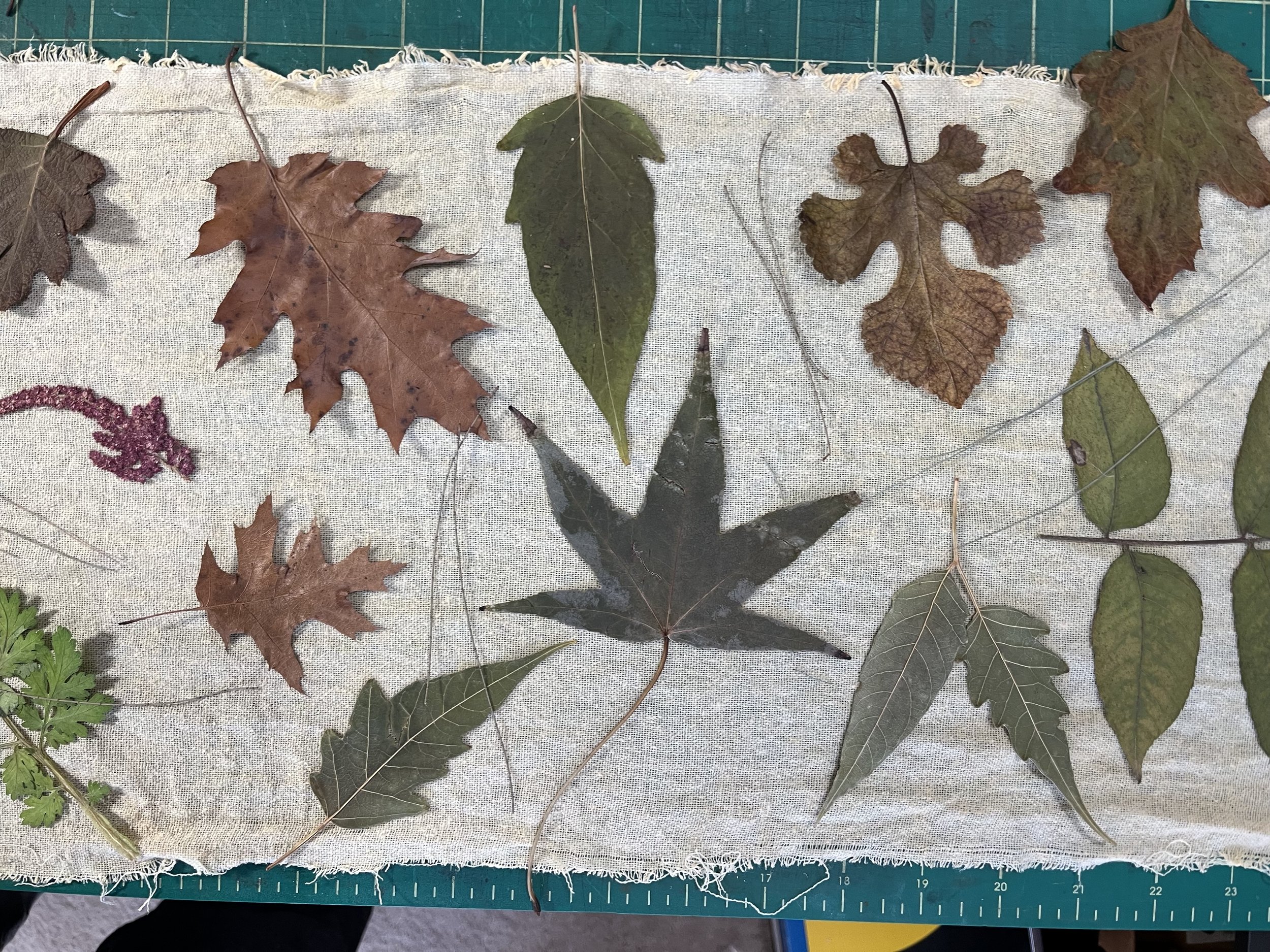
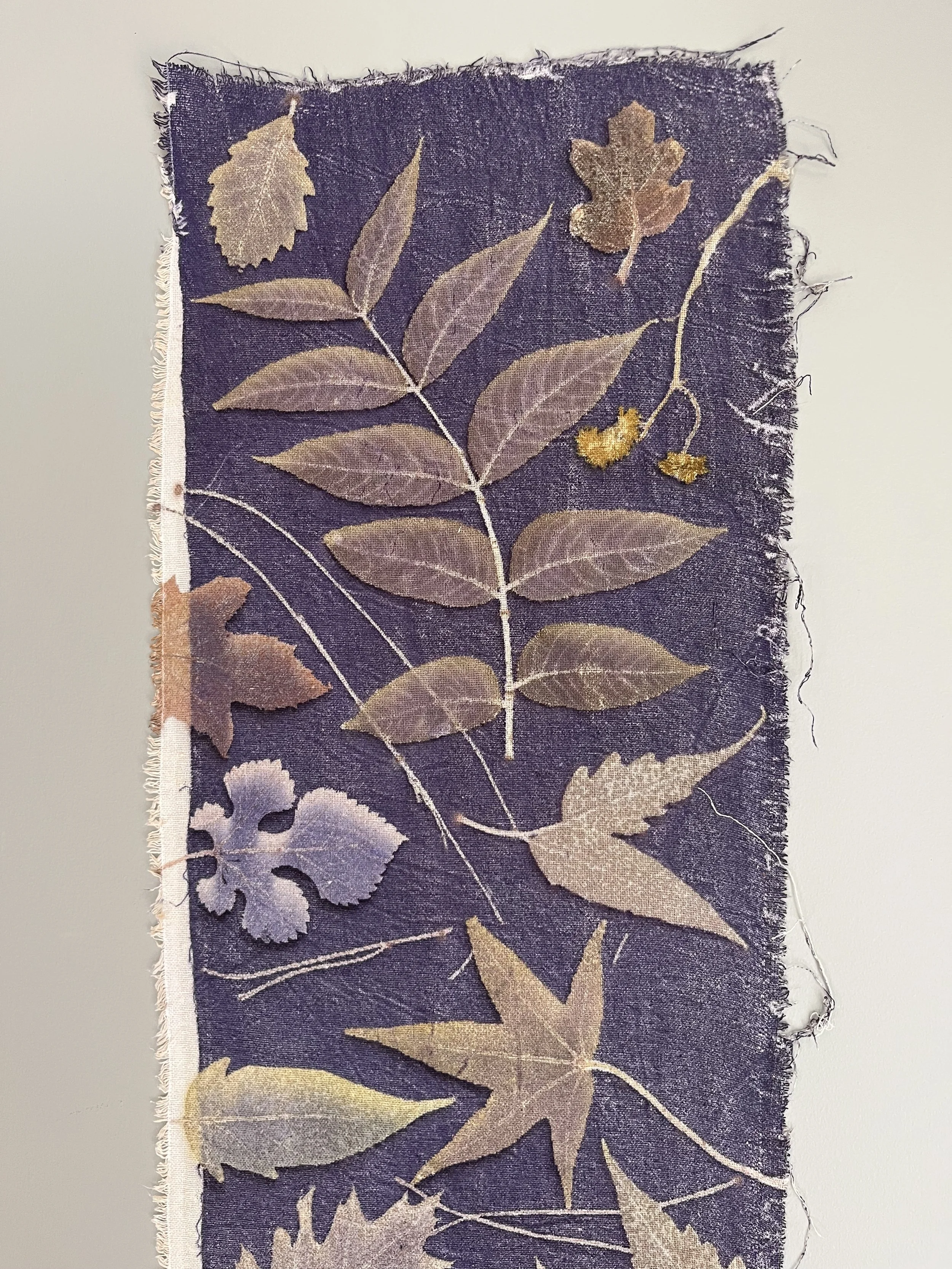
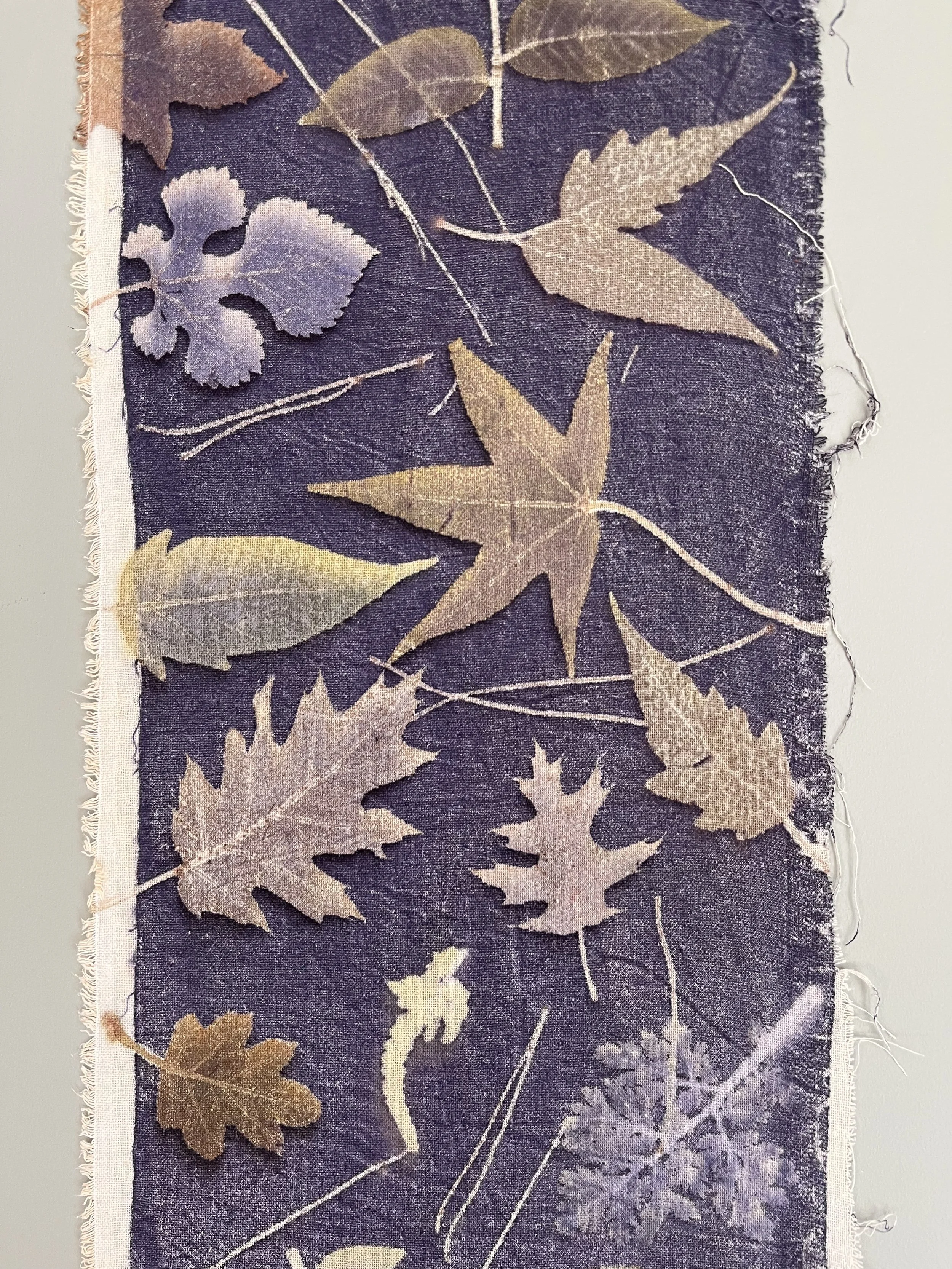
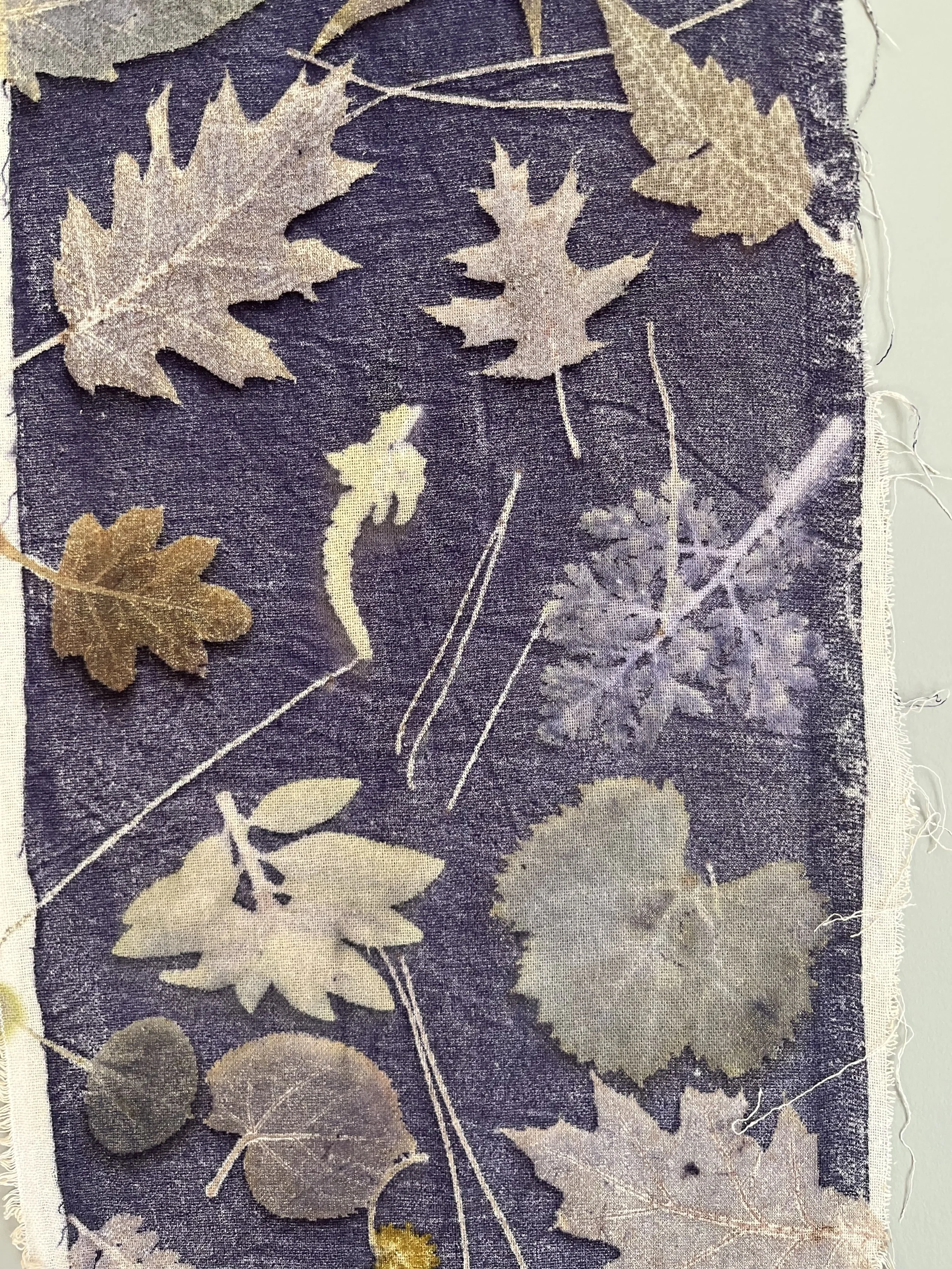
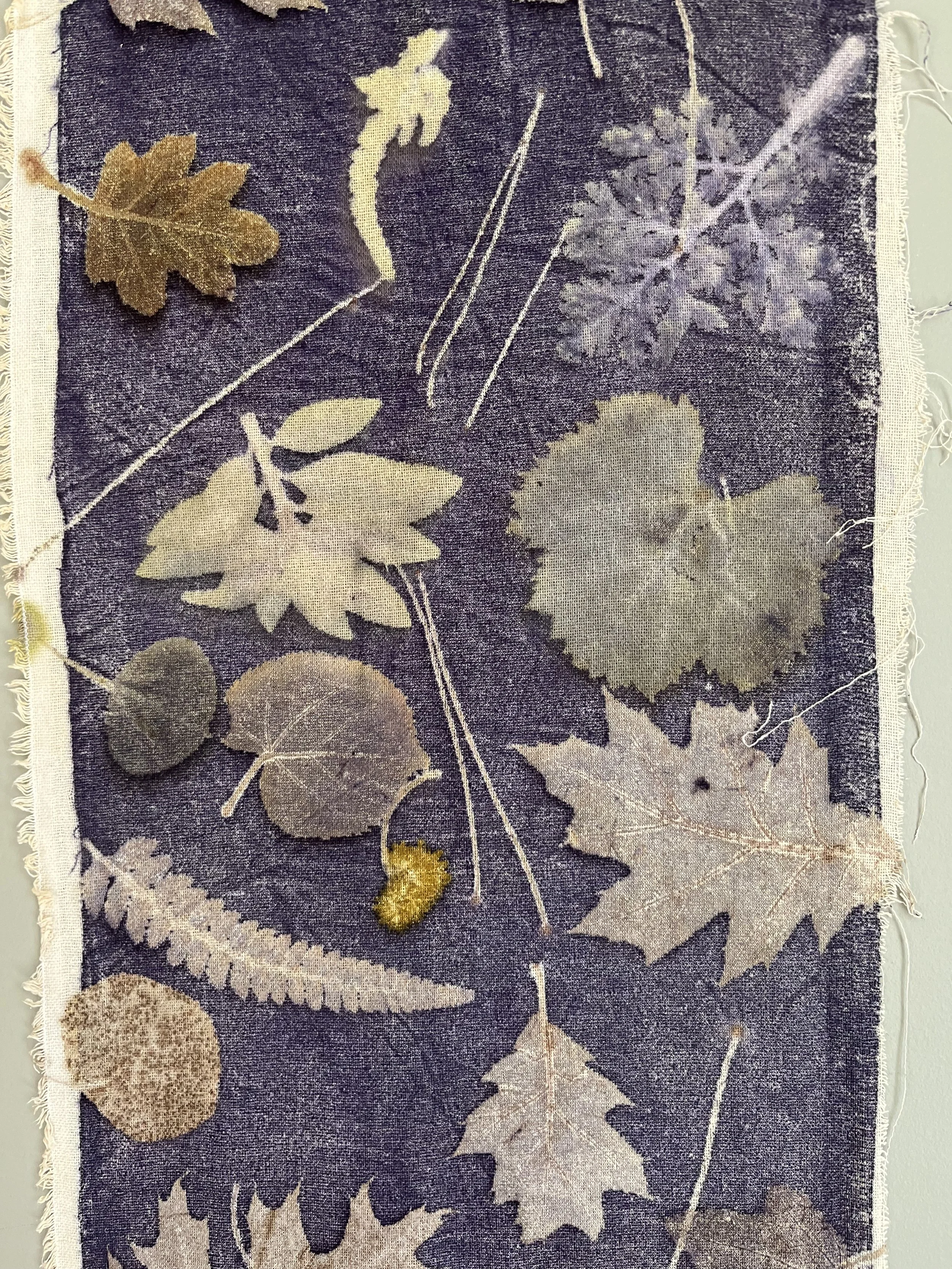
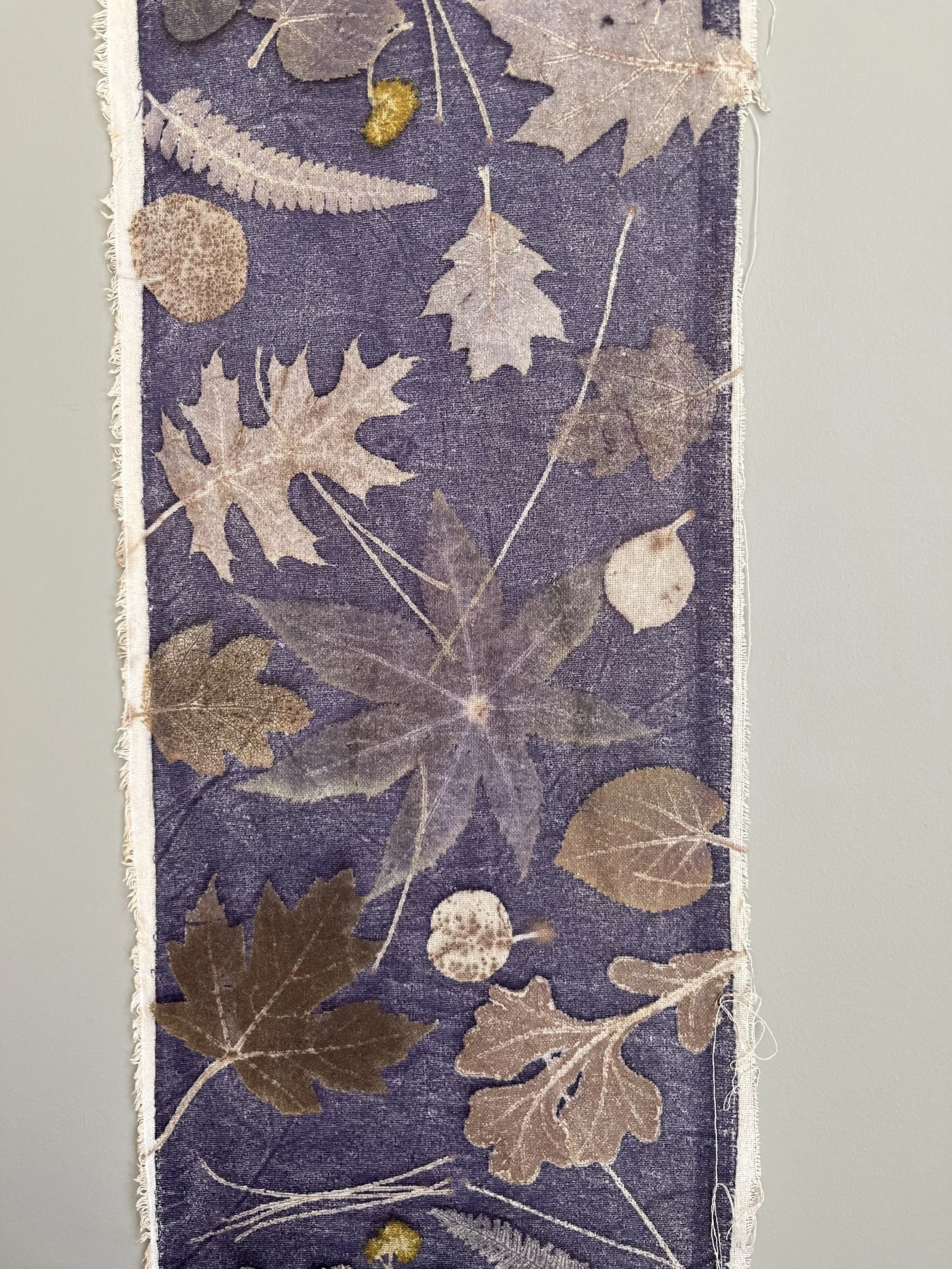
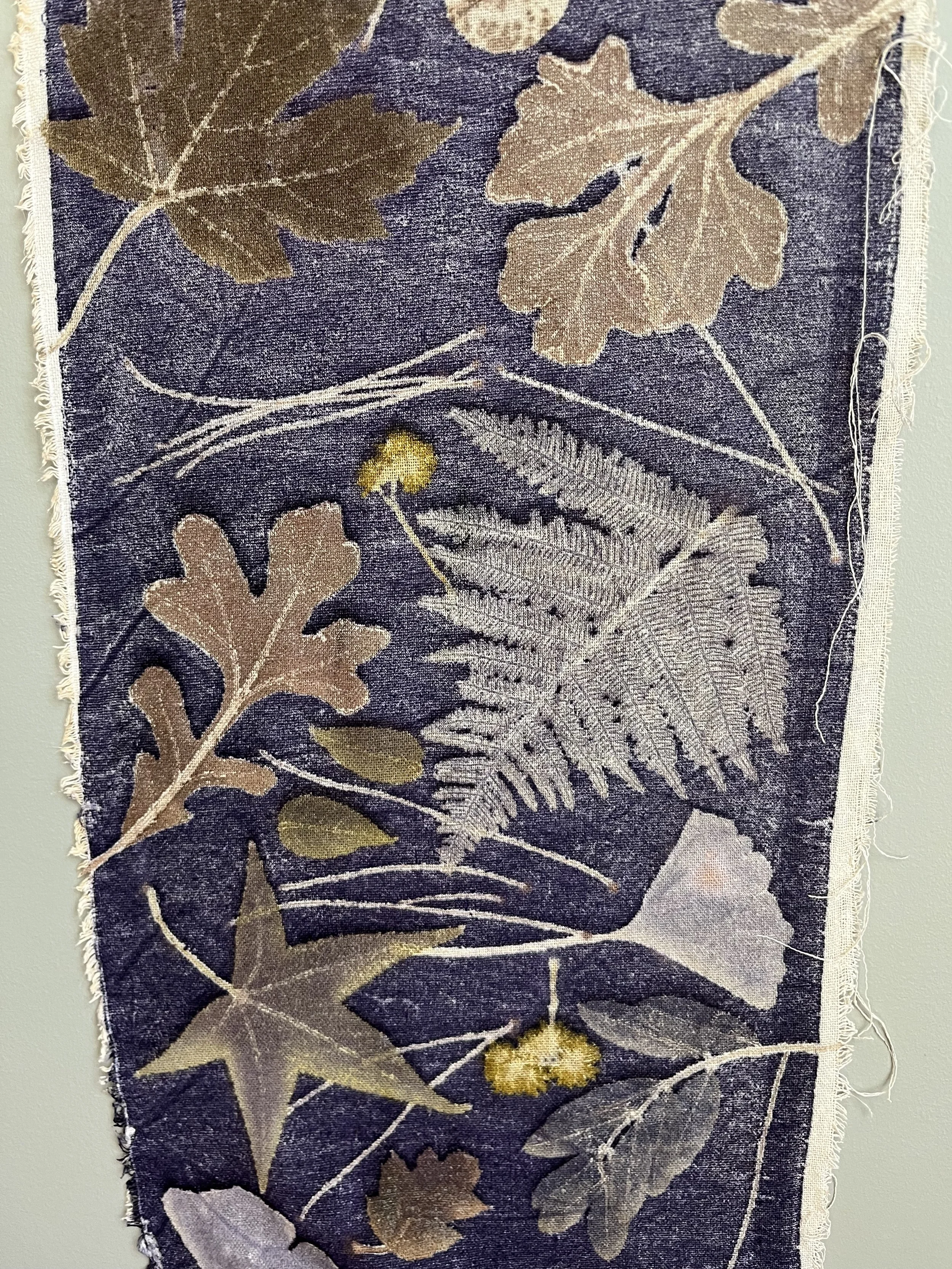
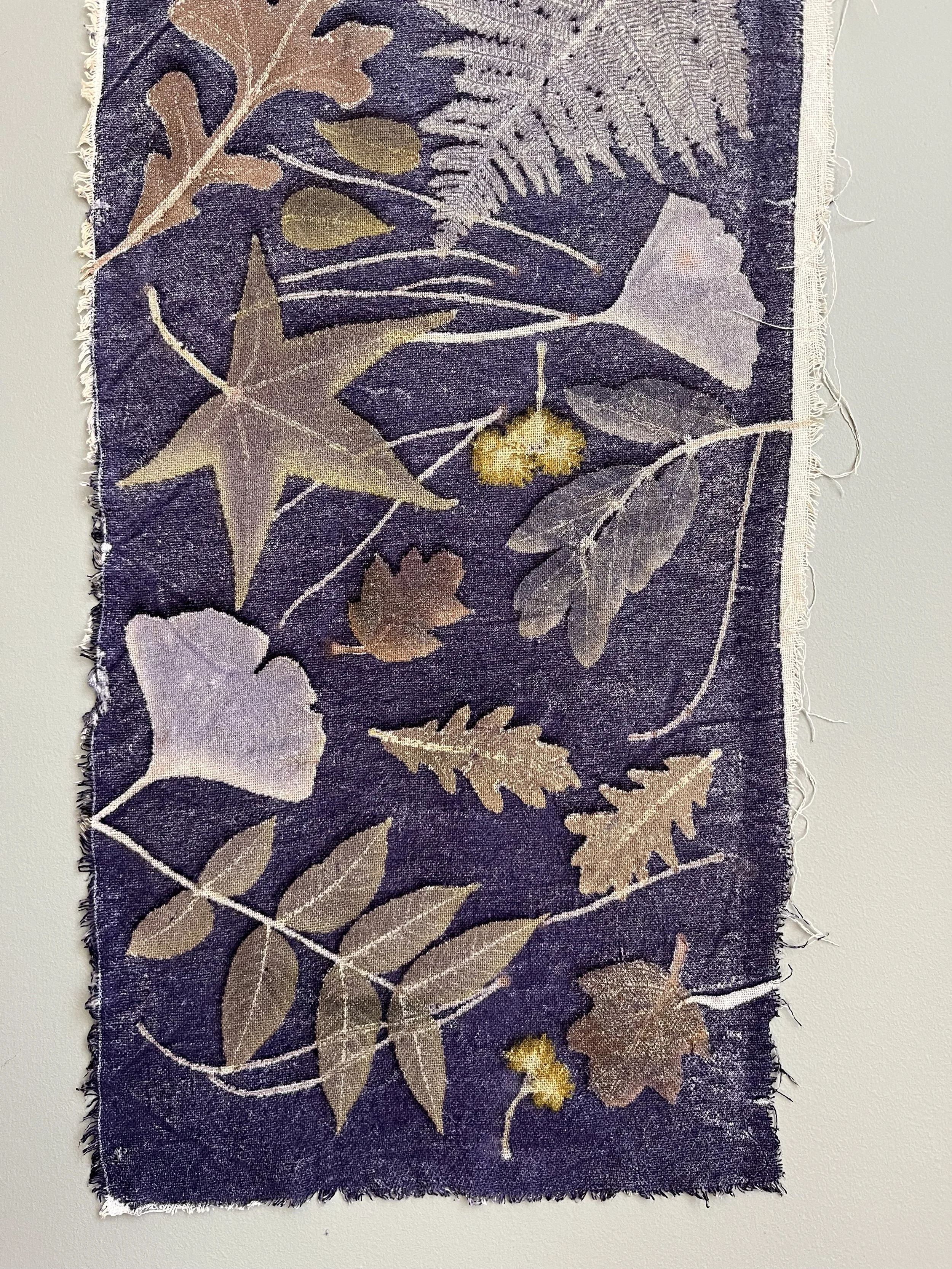
Loogwood blanket
Four experiments:
0. Target: raw silk, extra Alum + Iron, Blanket: thick flannel dye
Target: extra Alum + Iron, Blanket: Blanket: thick flannel dye
Target: extra Alum + Iron, Blanket: sheet flannel dye
Target: extra Alum + Iron, Blanket: French terry dye
Silk: Habotai 10mm in 1,2,3
All silk is pre-mordanted with alum, traditional bath: 1 hour simmer. Extra Alum is applied cold, one hour soak.
Dye is Logwood: 70 degrees Celsius 1 hour (turning off heat during that hour)
Alum is Aluminum sulphate Al2((SO₄)3
alum is Potassium Aluminum Sulfate KAl(SO₄)₂·12H₂O
Iron is iron mordant at 70 degrees Celsius for 10 minutes (turning off heat for those ten minutes)
Rinse well after alum and after iron.
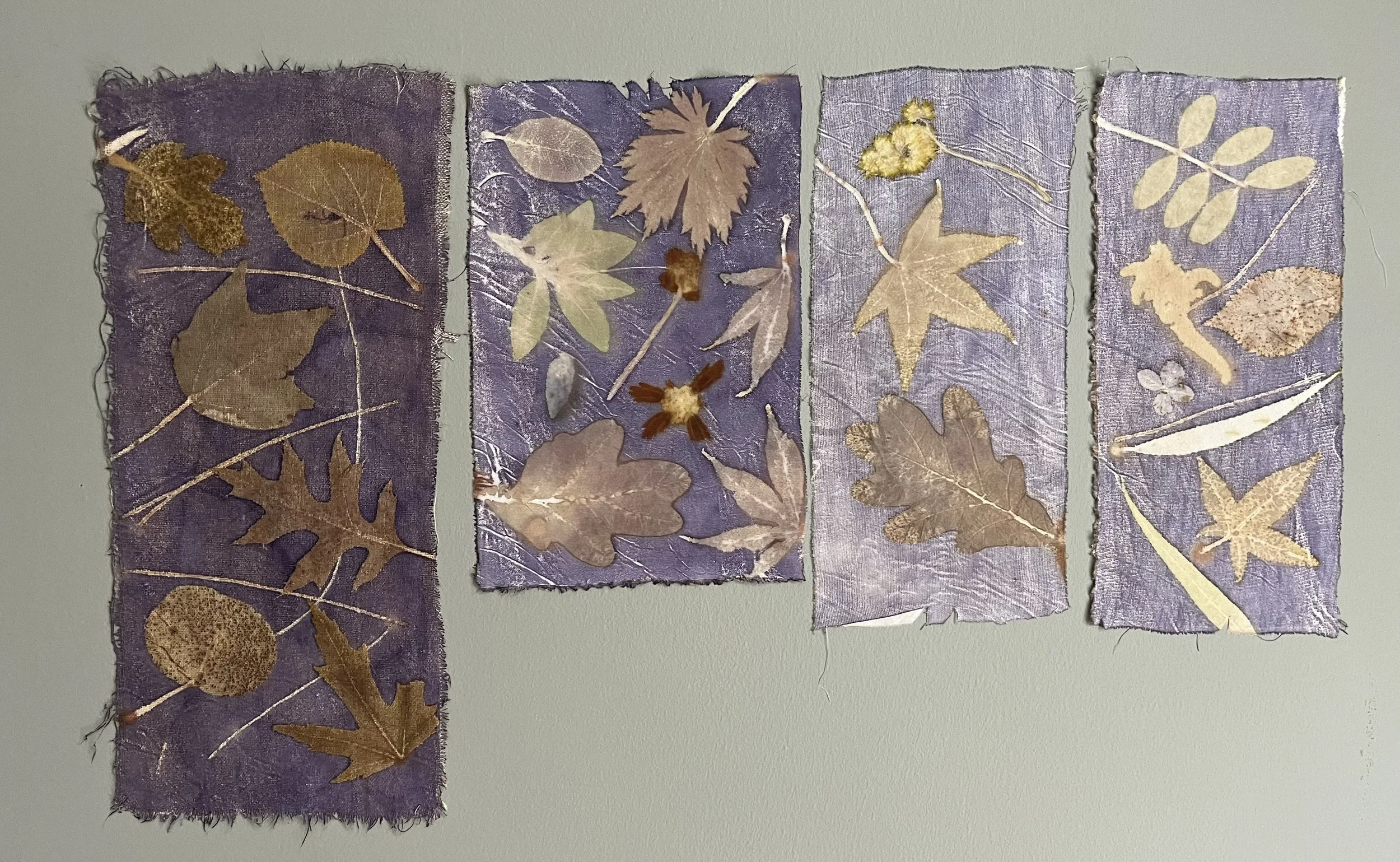
0 - 1 - 2 - 3
#0
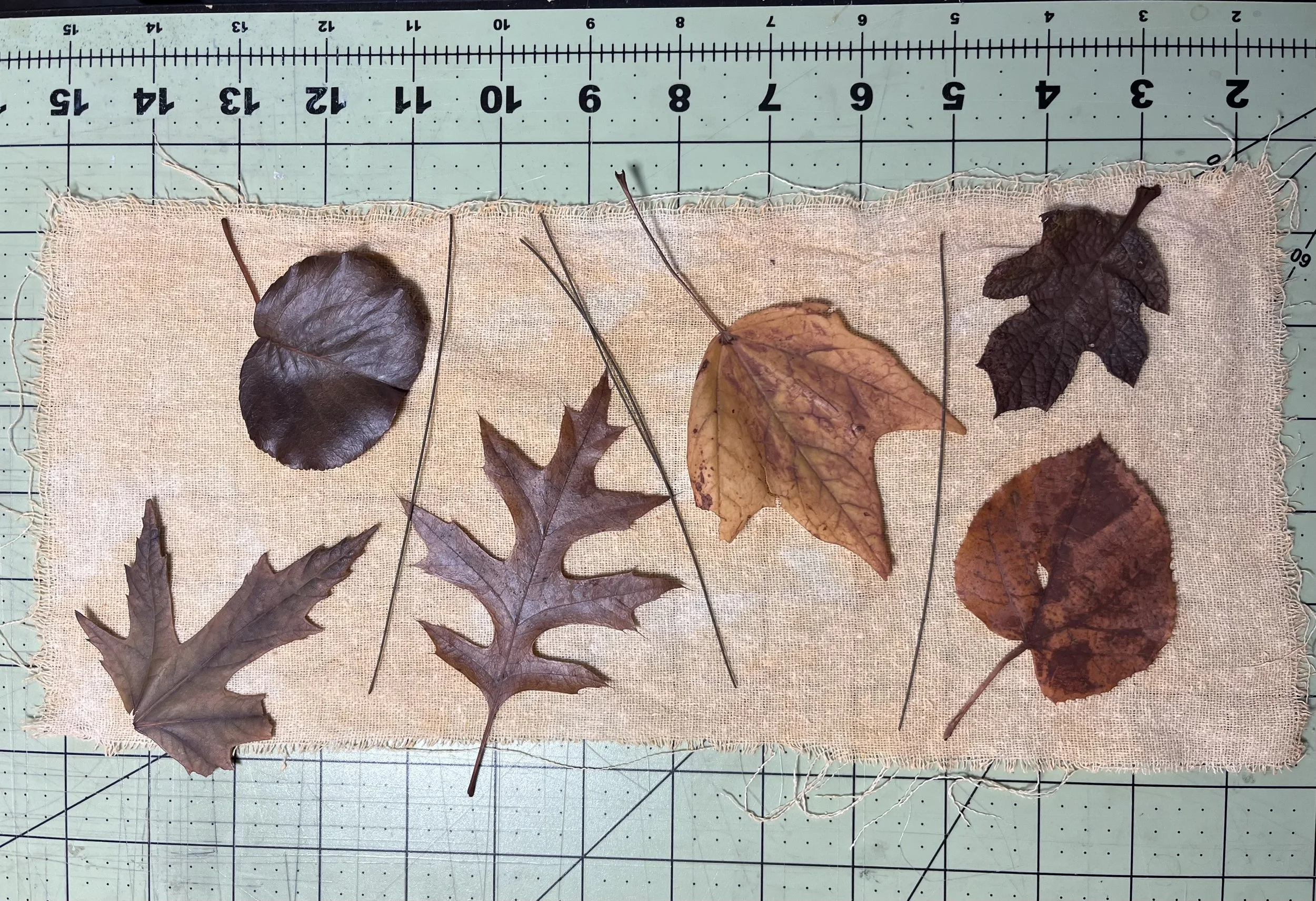
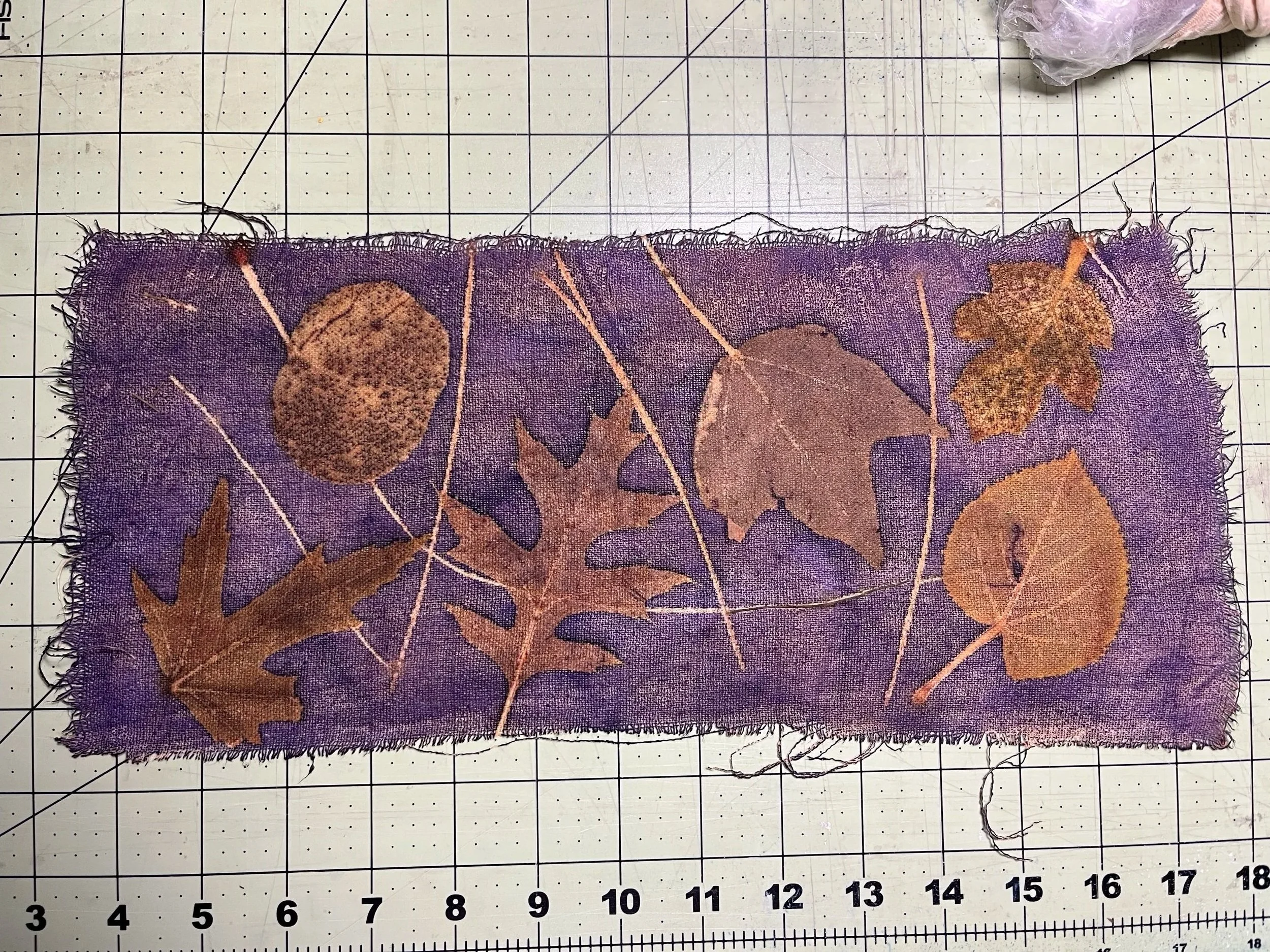
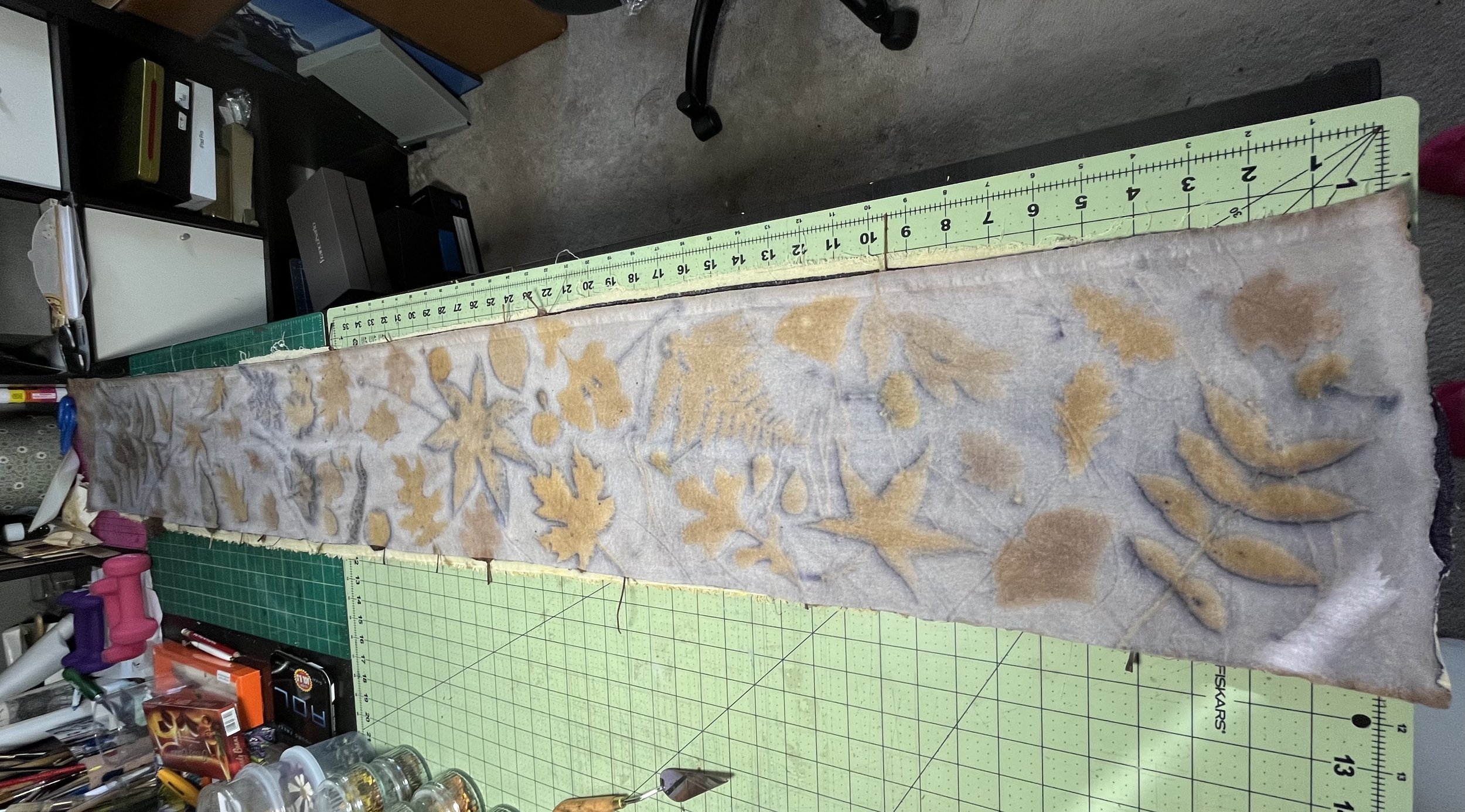
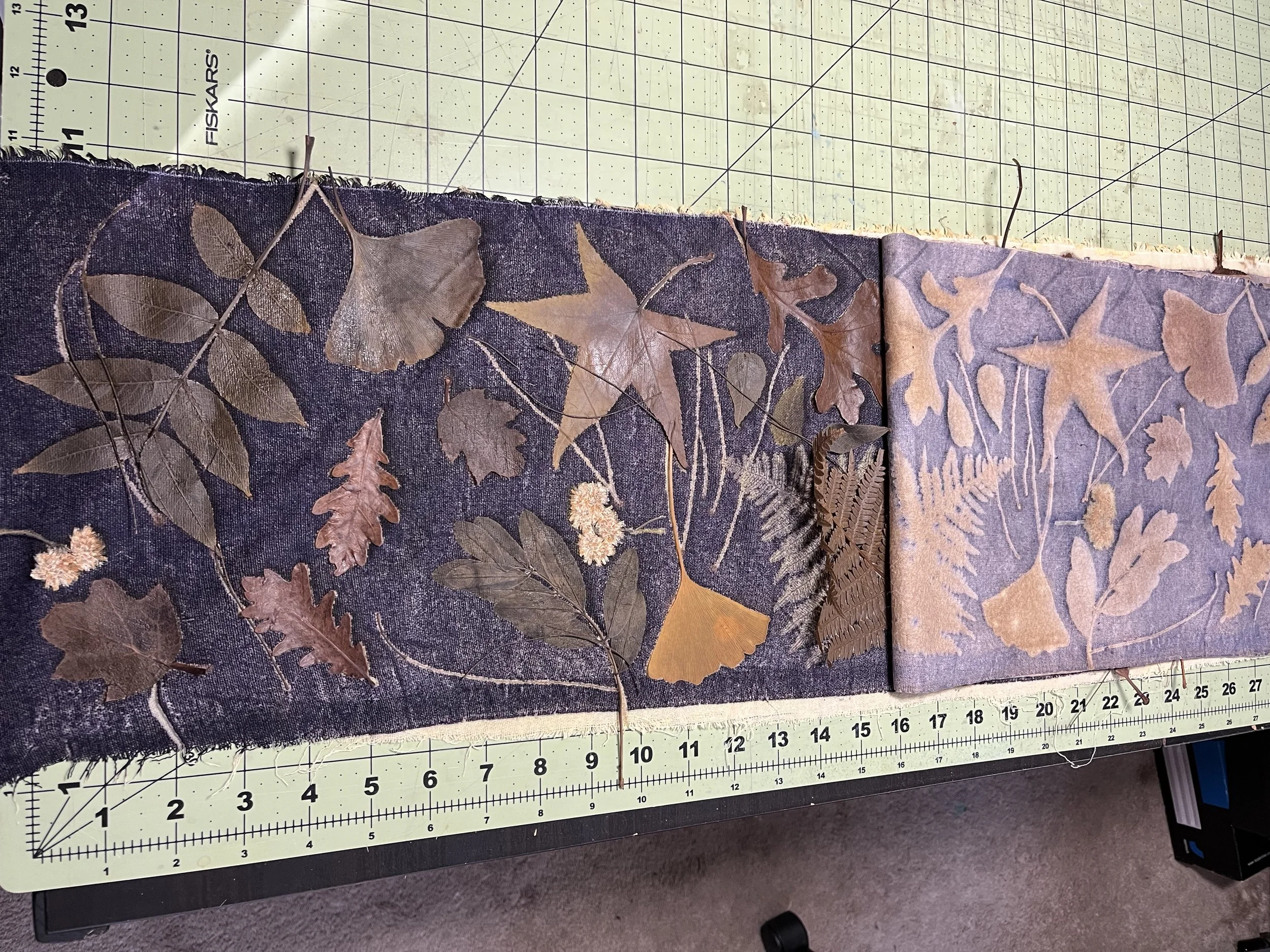
The result is good with thick flannel blanket.
#1
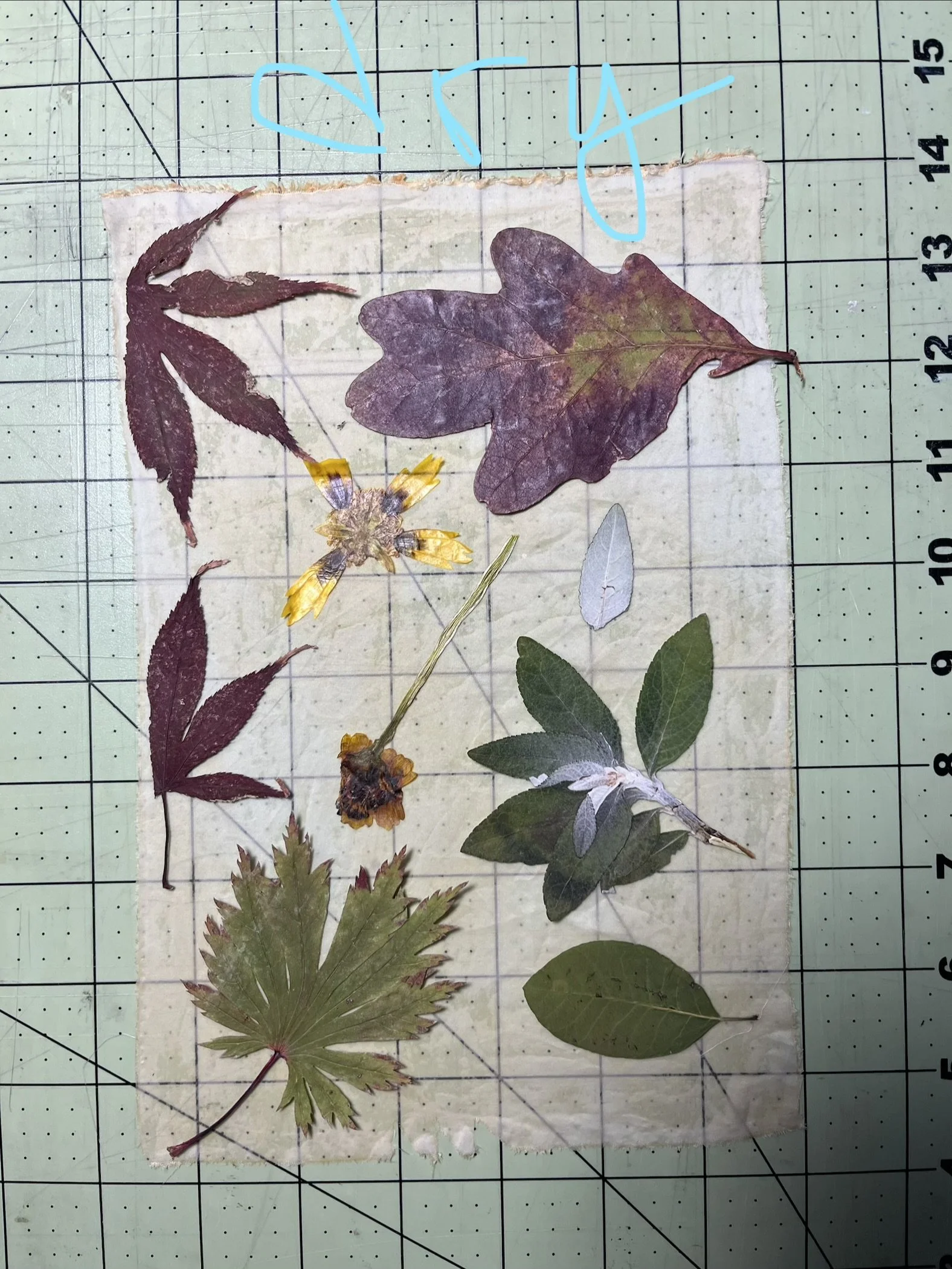
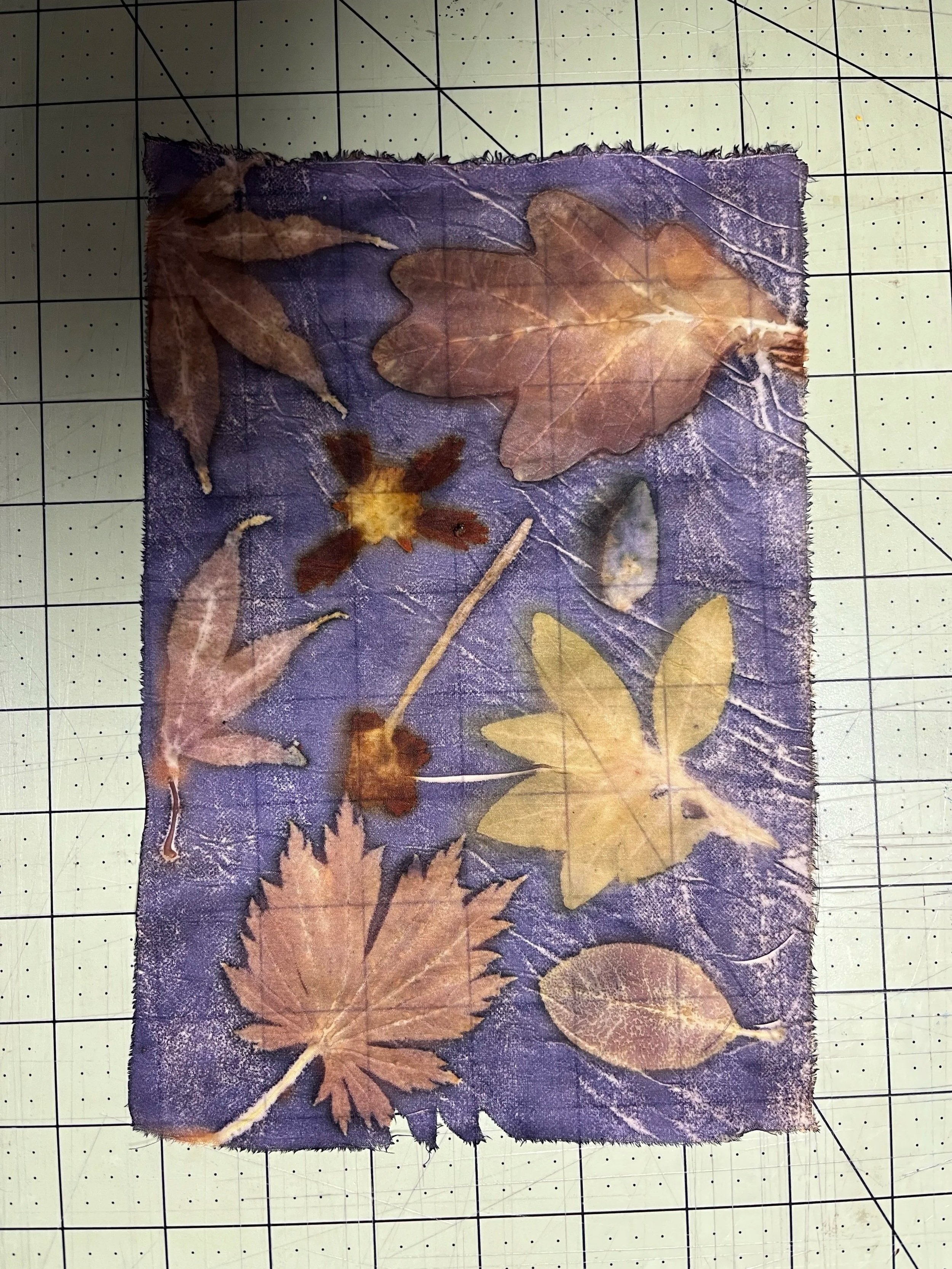
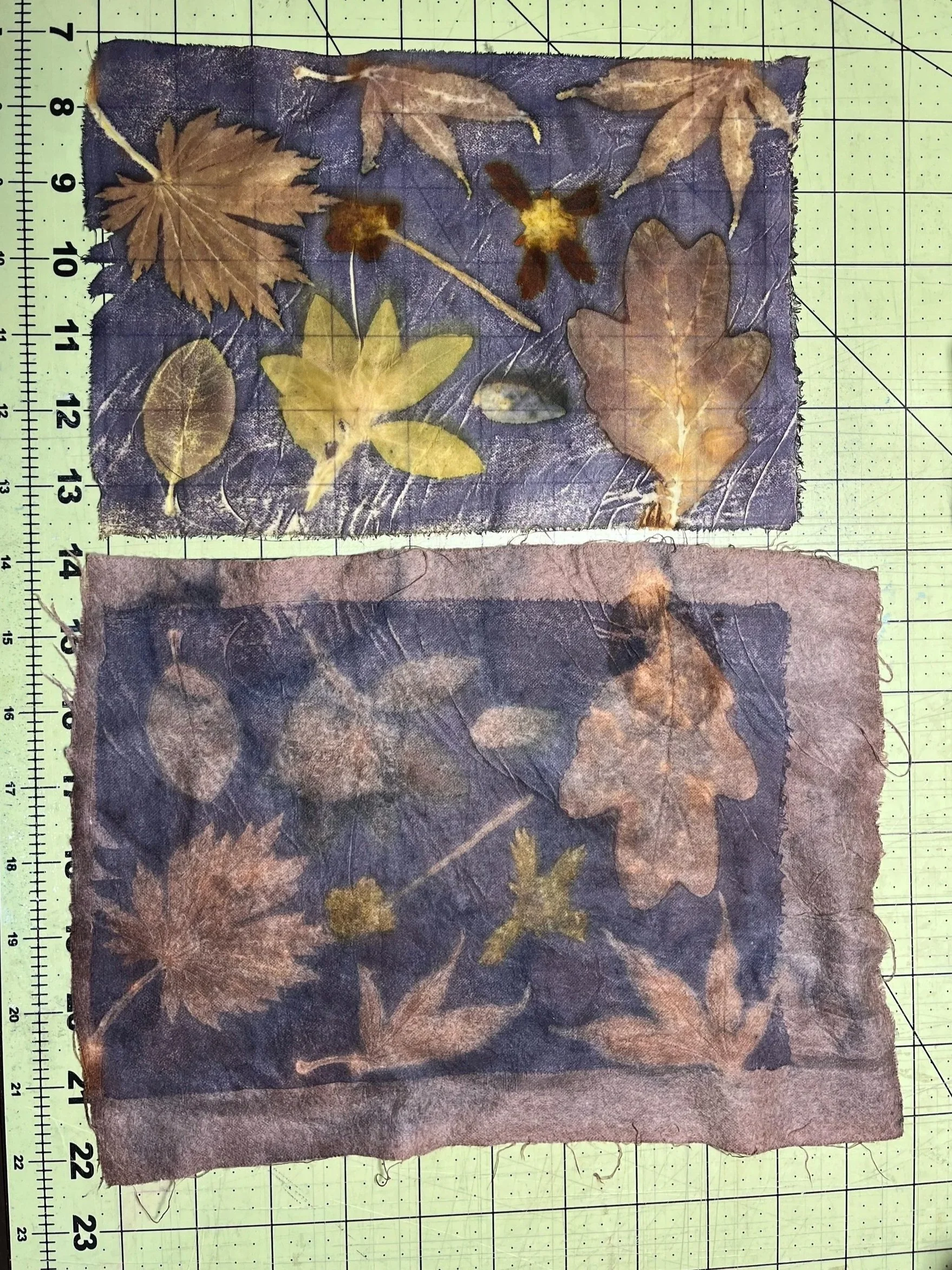
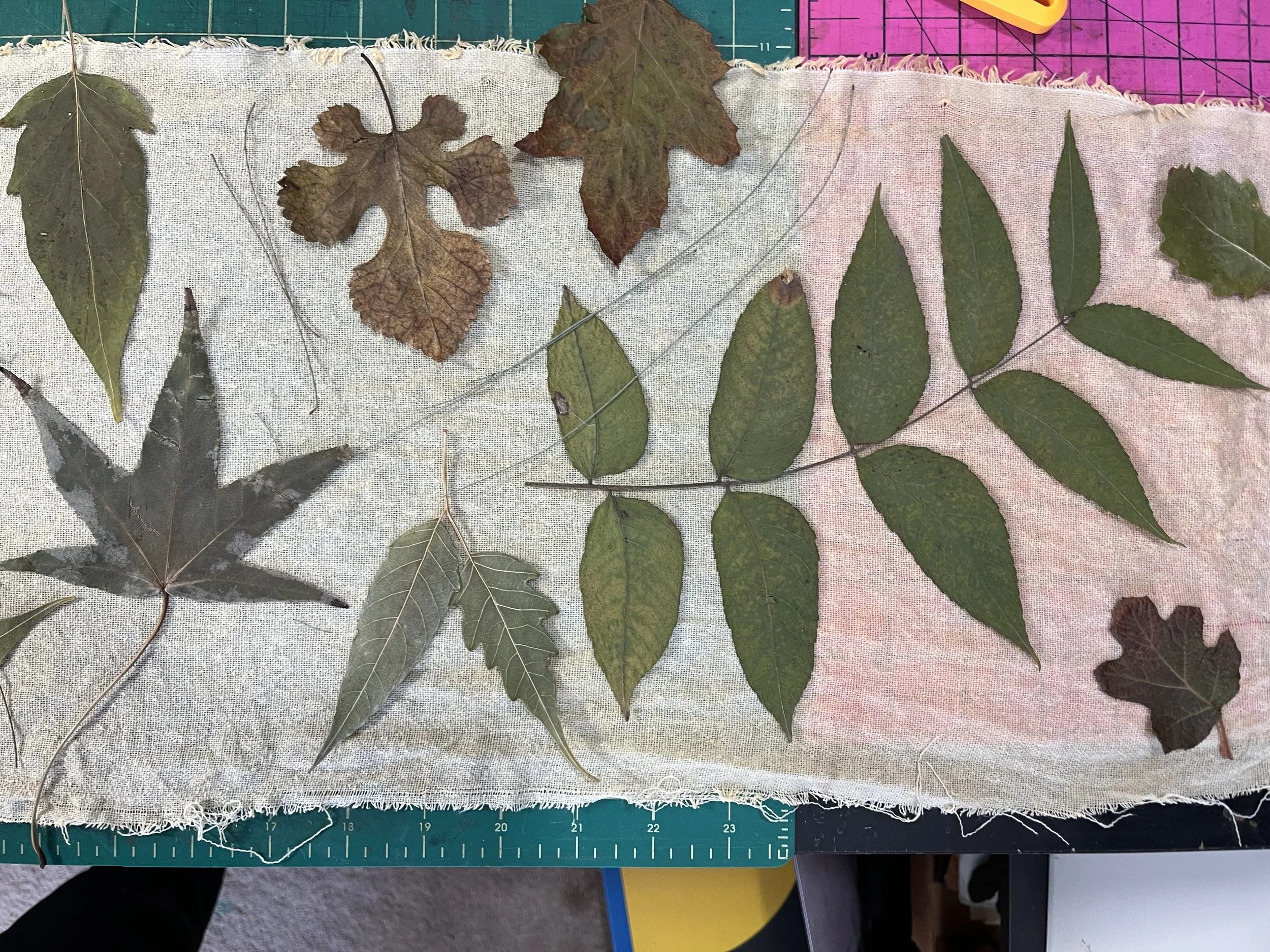
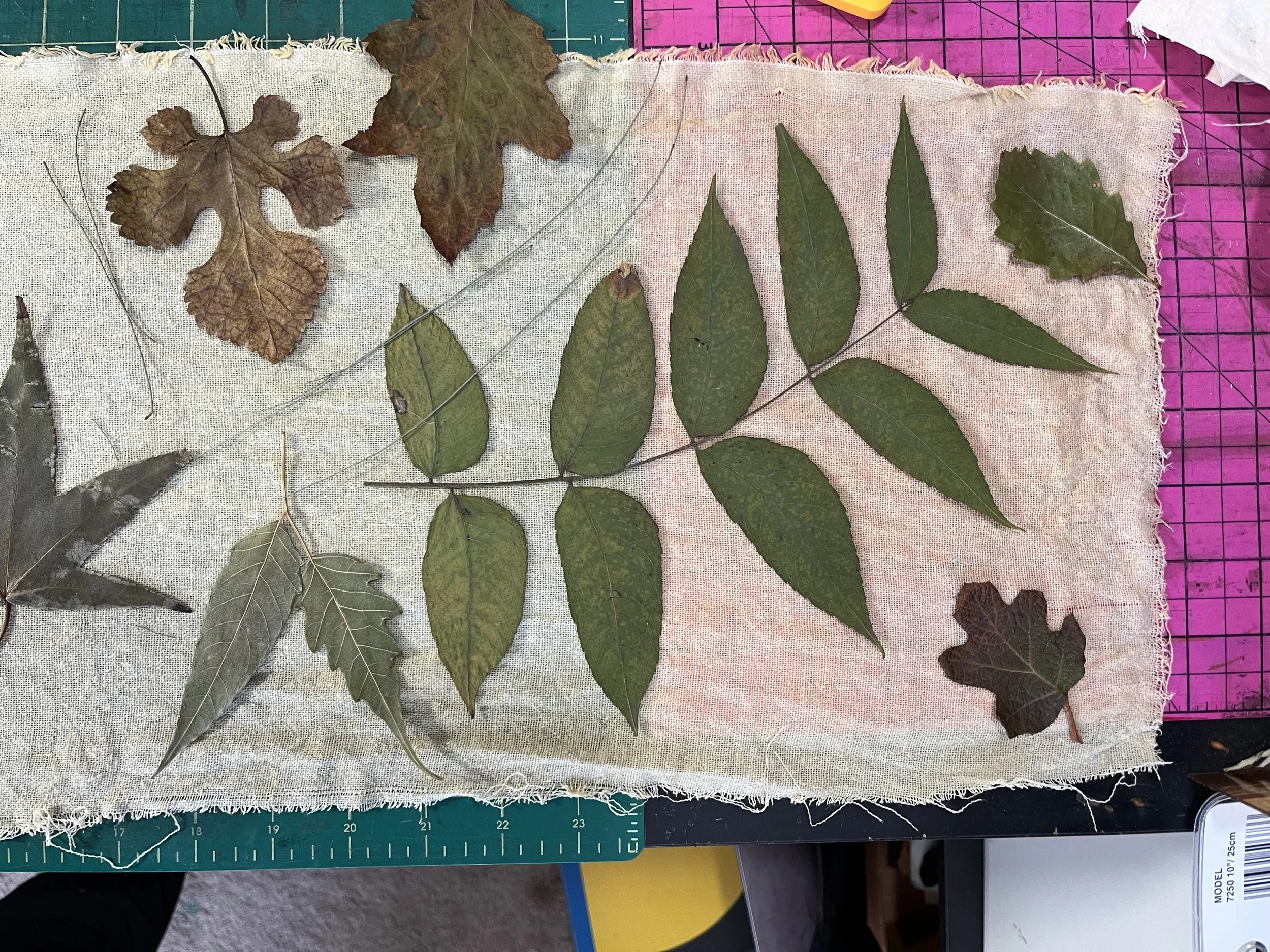
Leaves are dry. Logwood blanket thick flannel cotton. The result is good again with thick flannel cotton.
#2
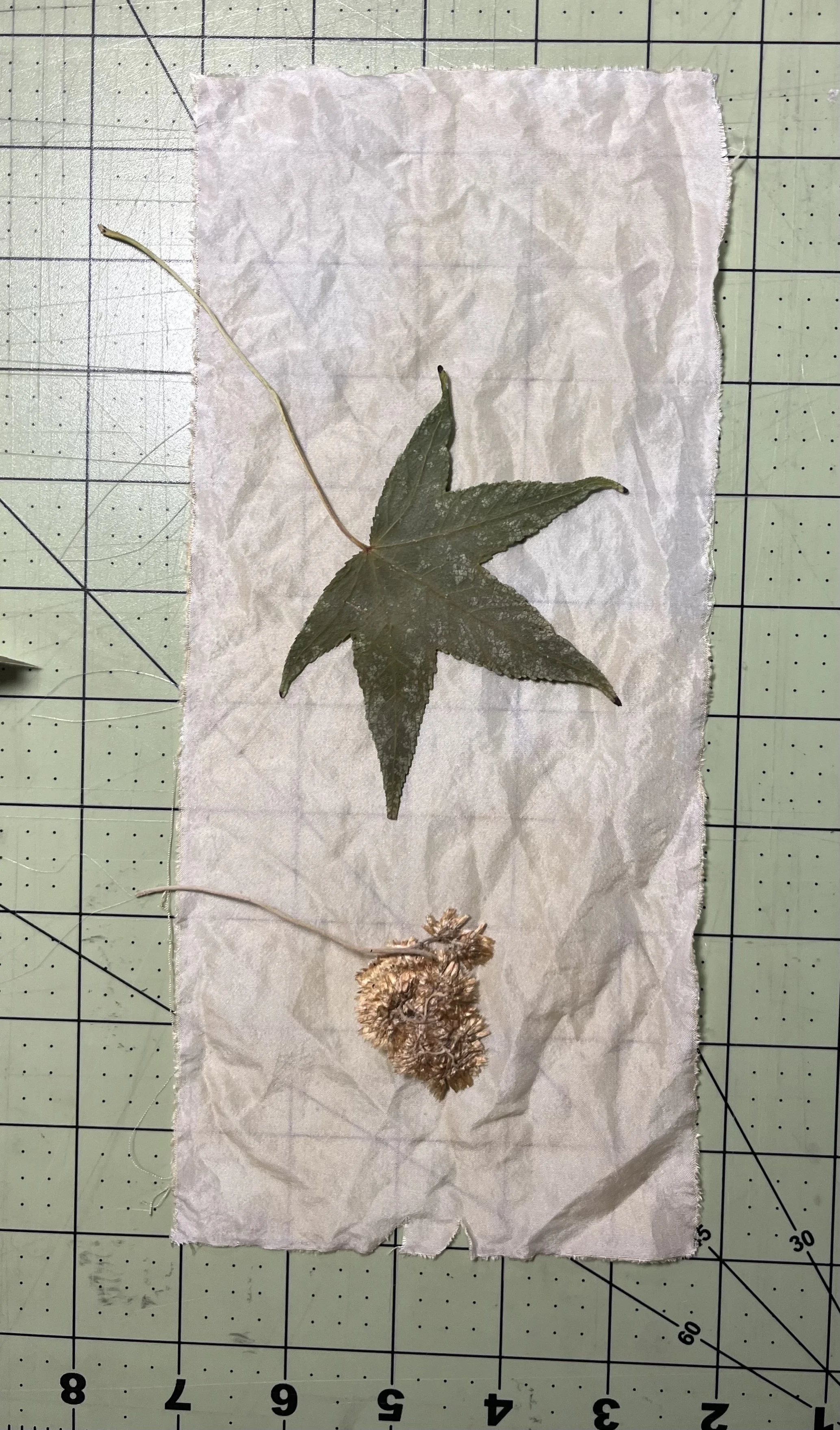
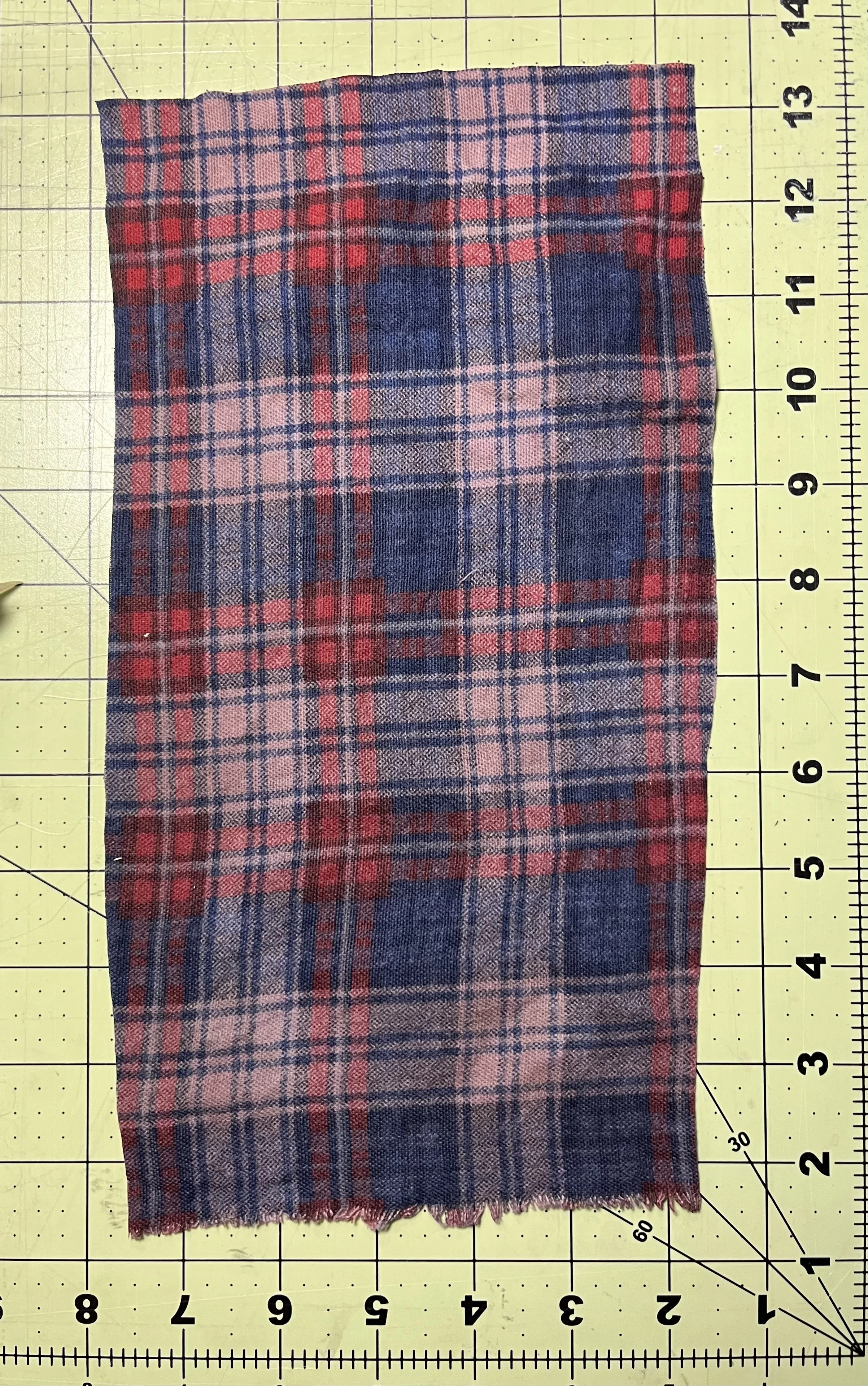
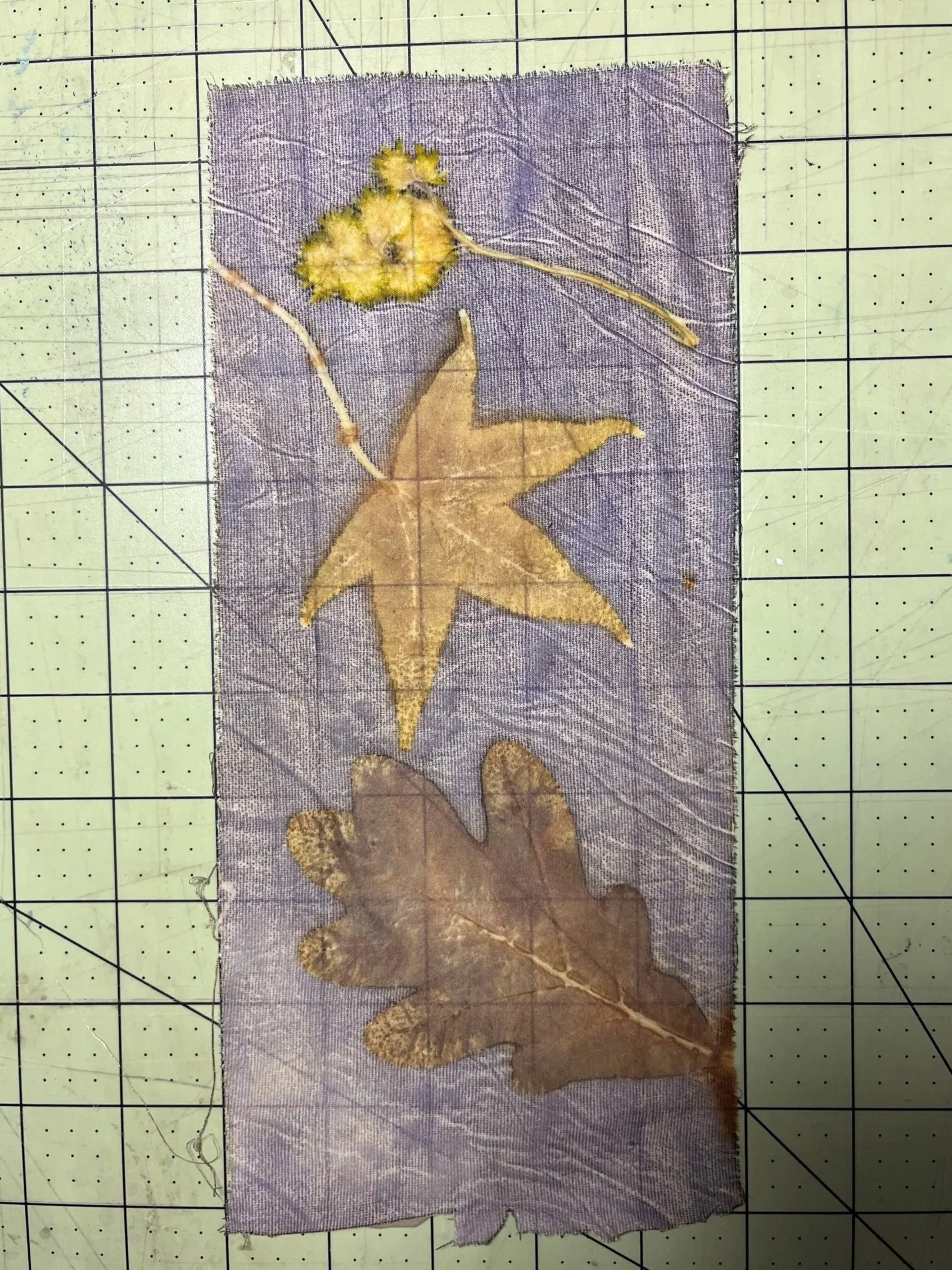
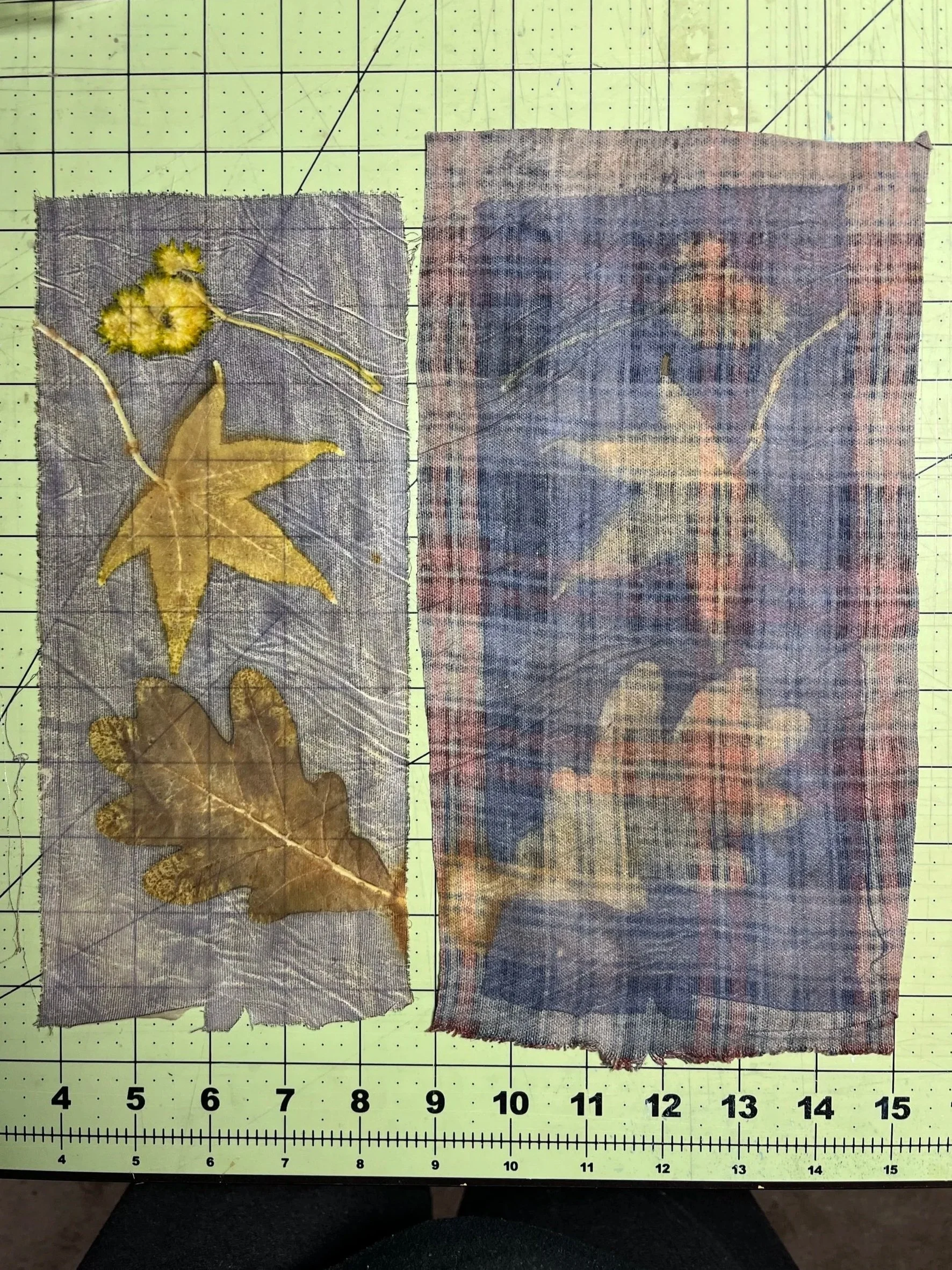
Leaves sweet gum, marcela and oak. The result is less intense with flannel sheet fabric in the blanket.
#3
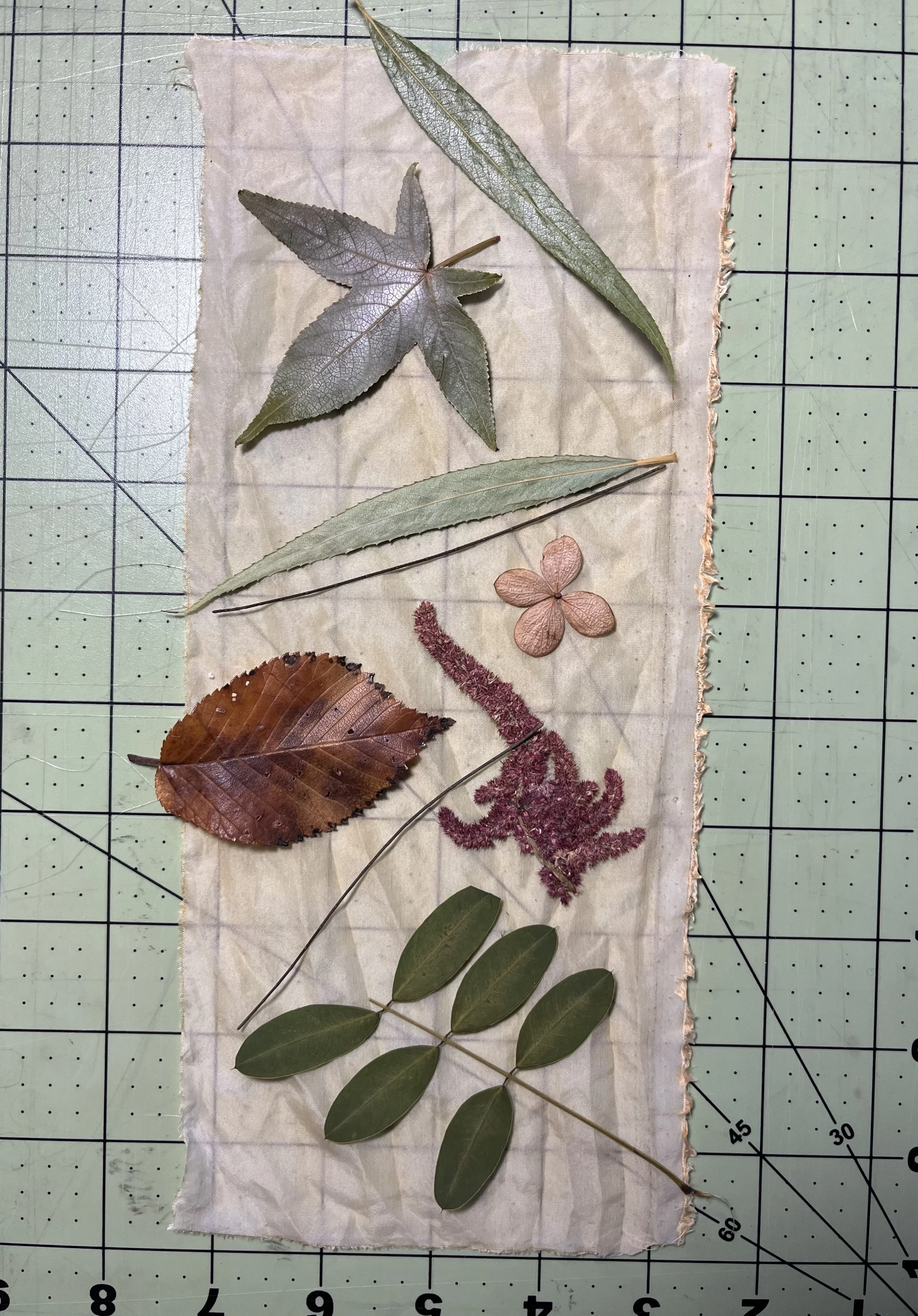
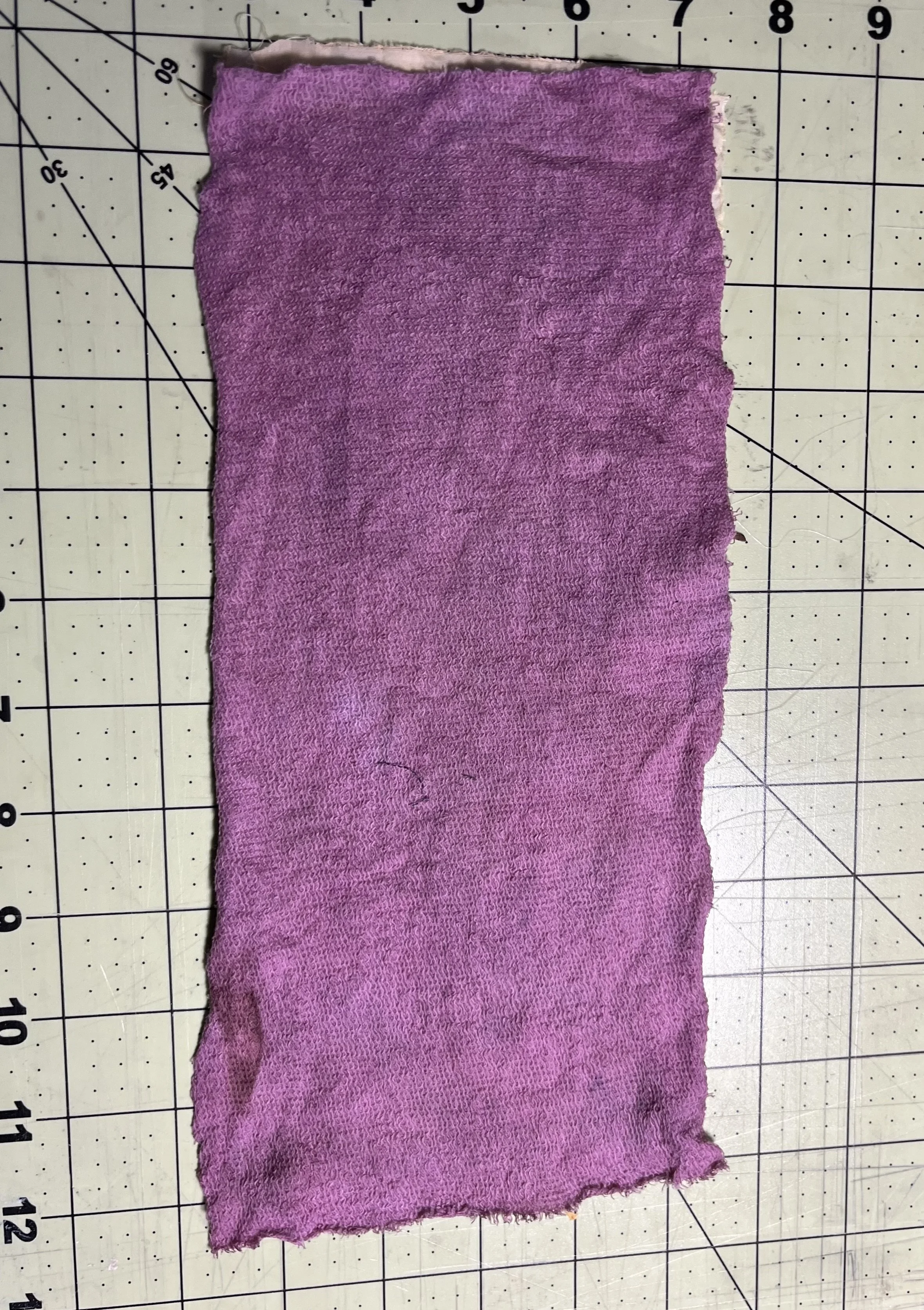
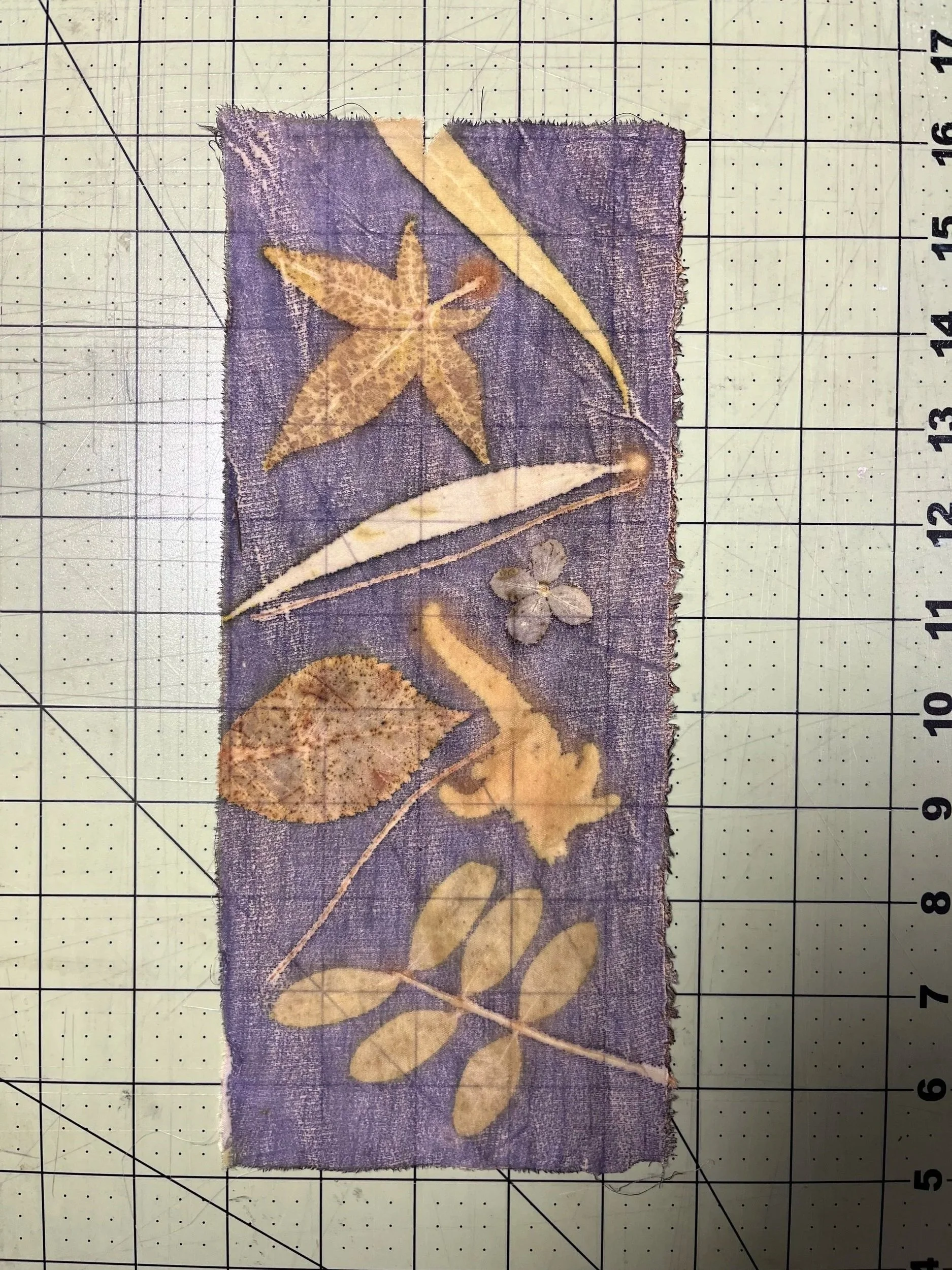
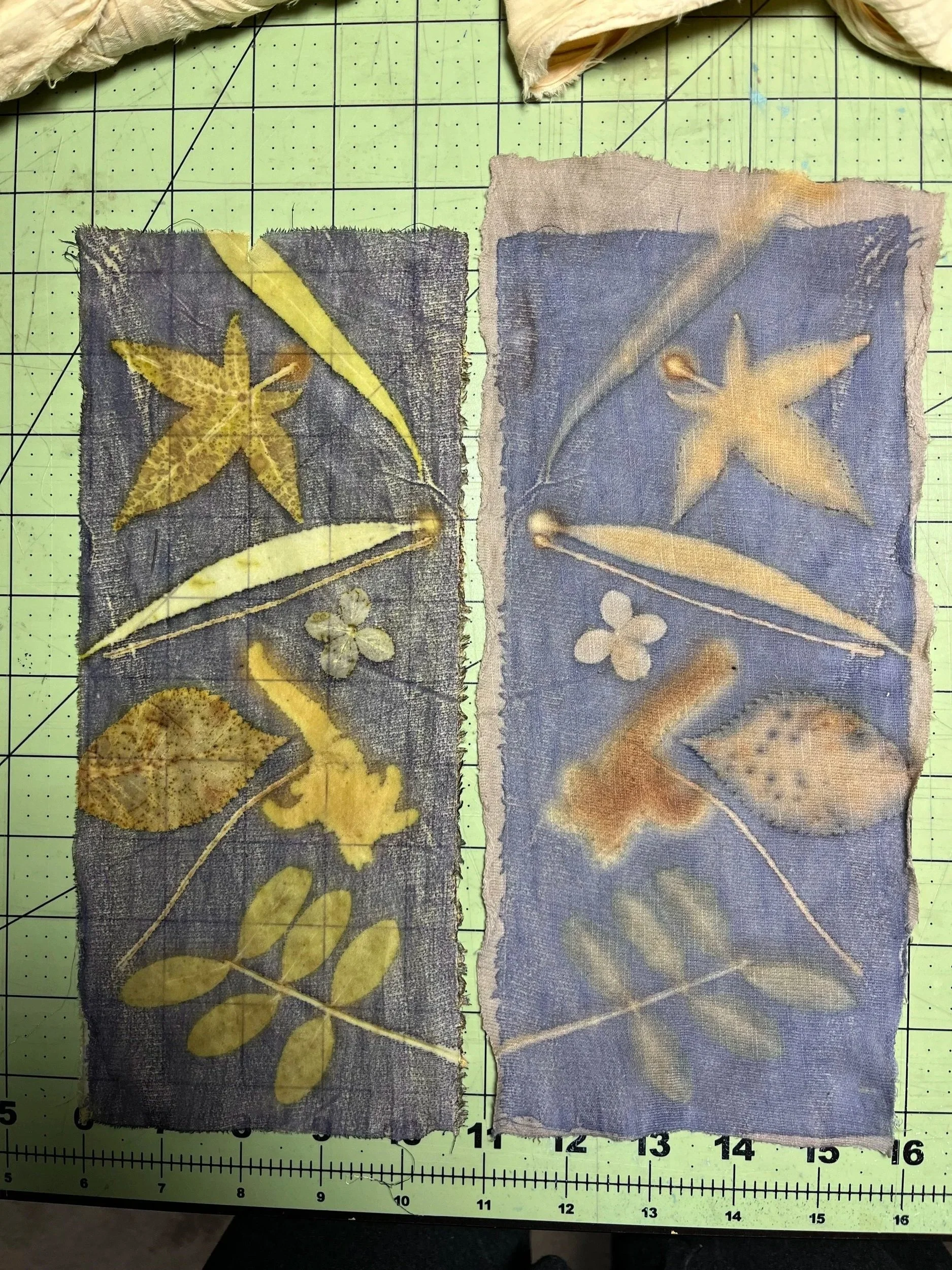
French terry cotton is the worst blanket.
Conclusion:
Blanket material is fundamental. Thick flannel is the best option.
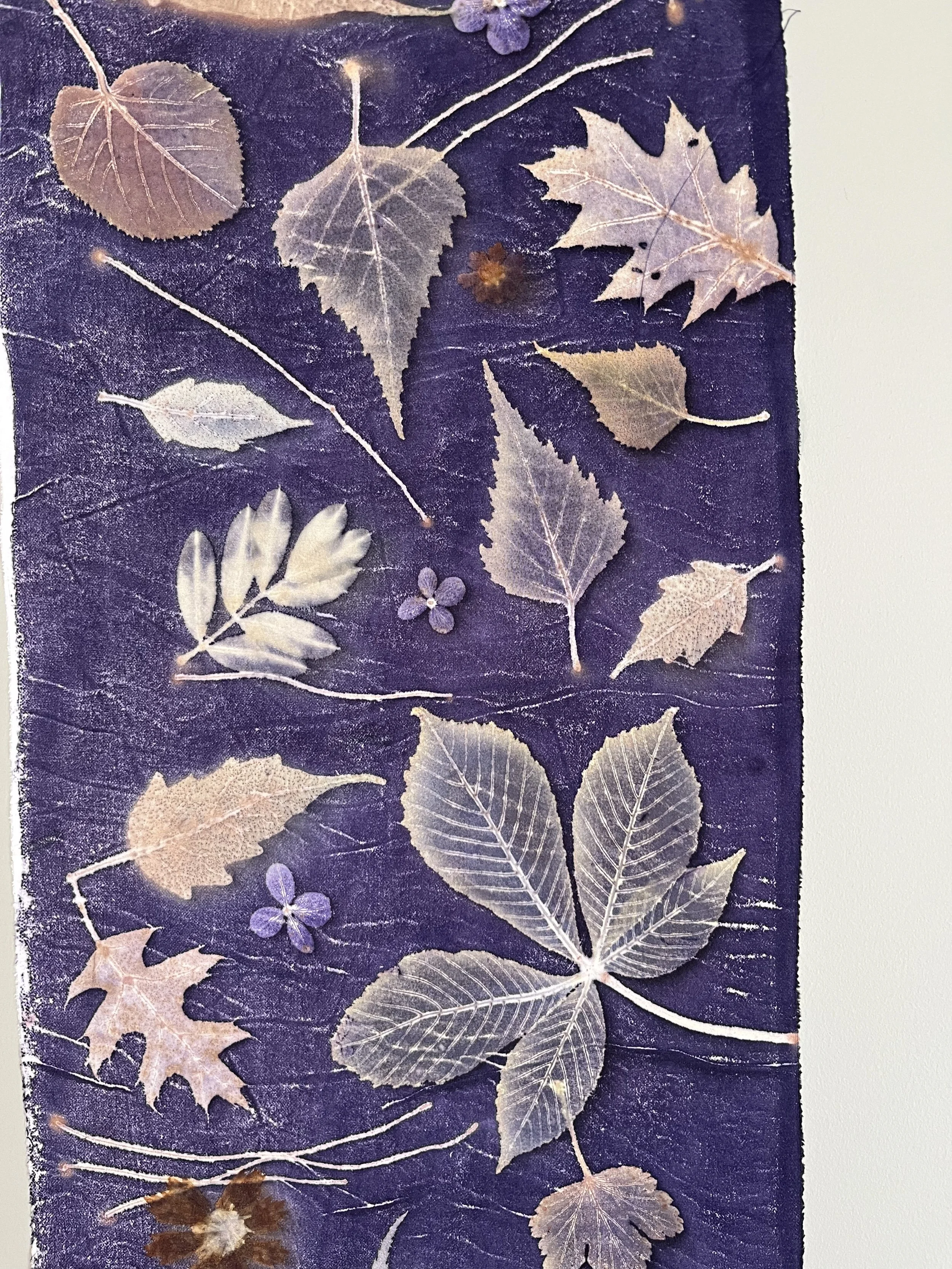
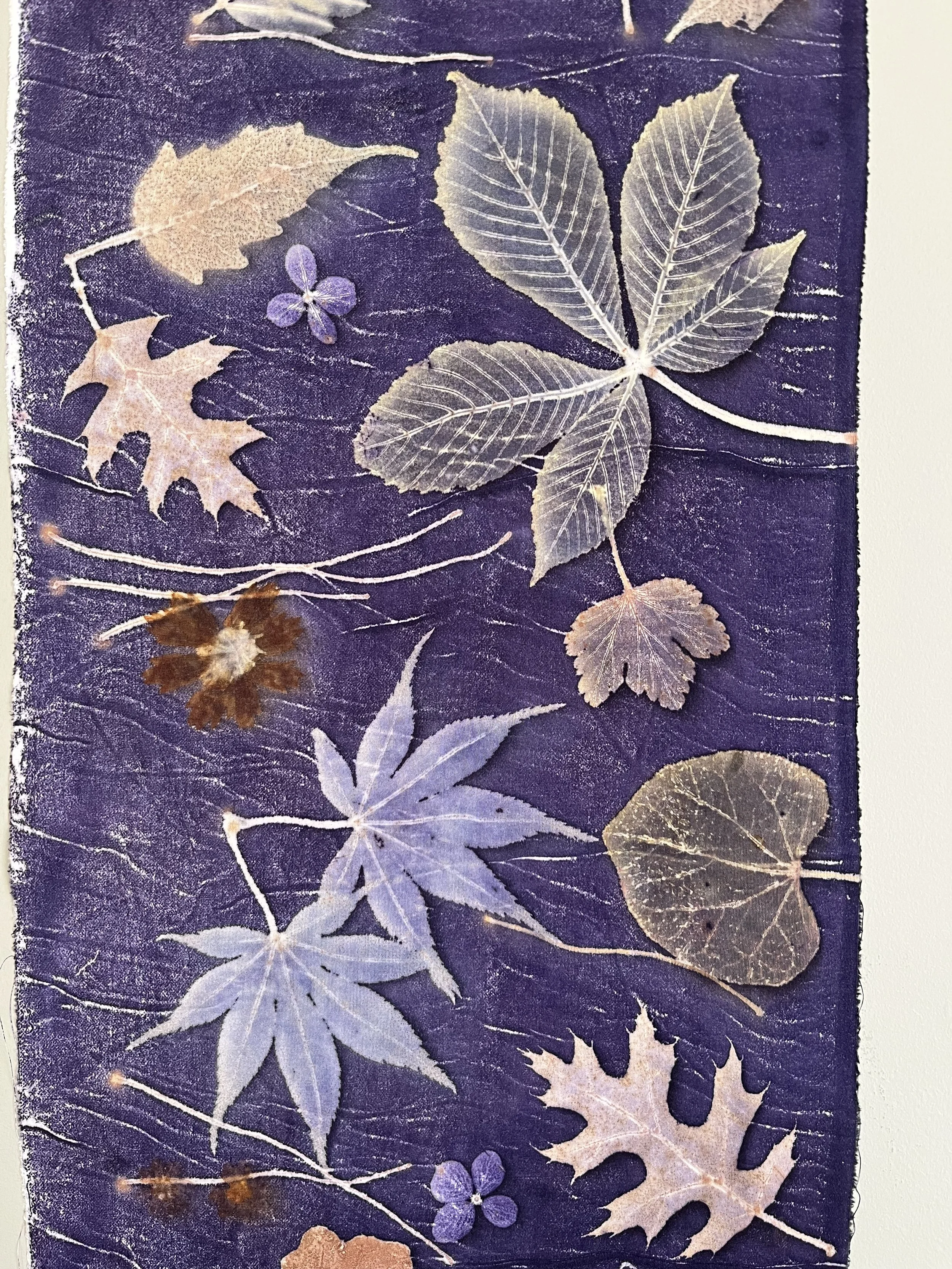
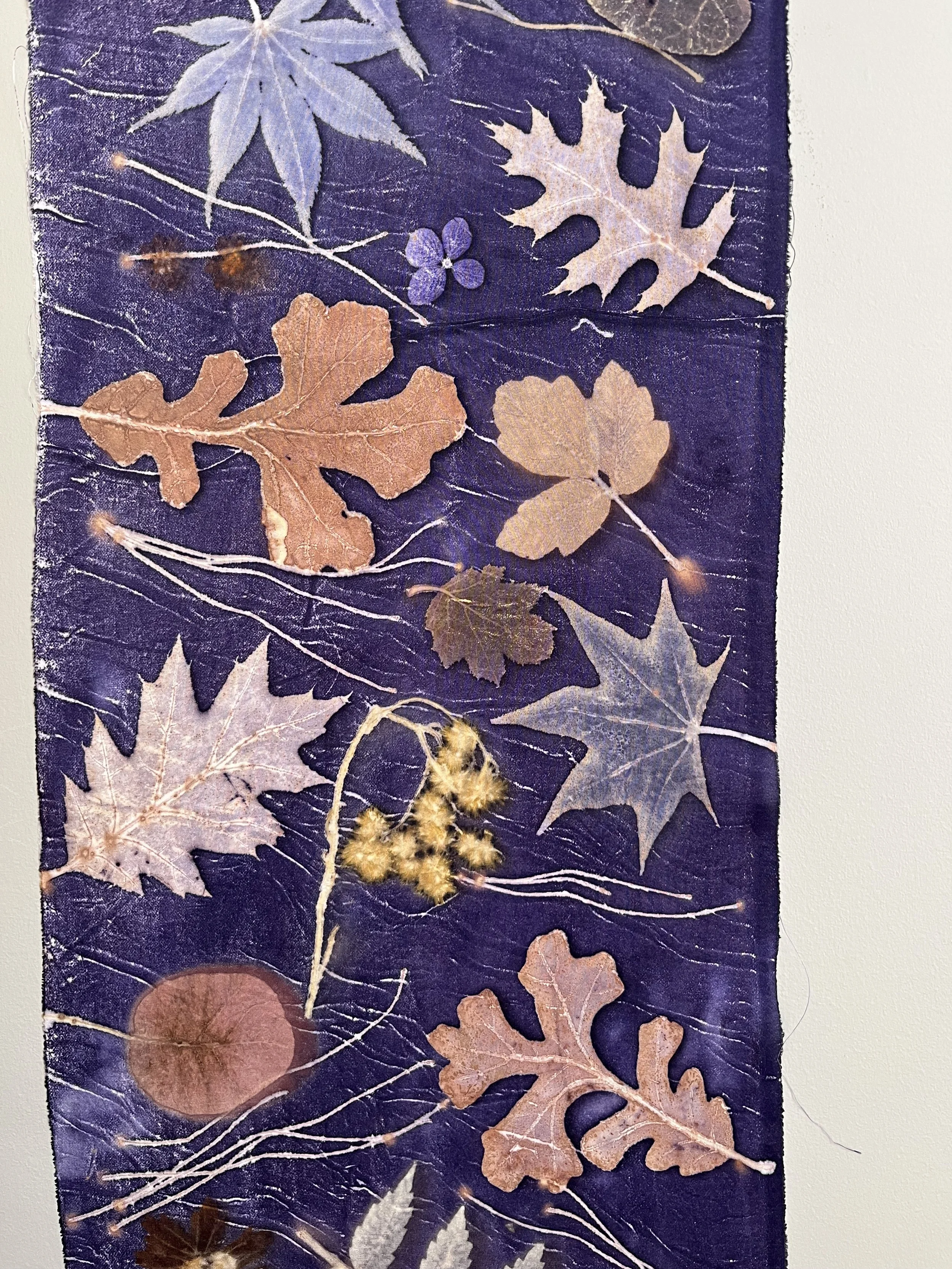
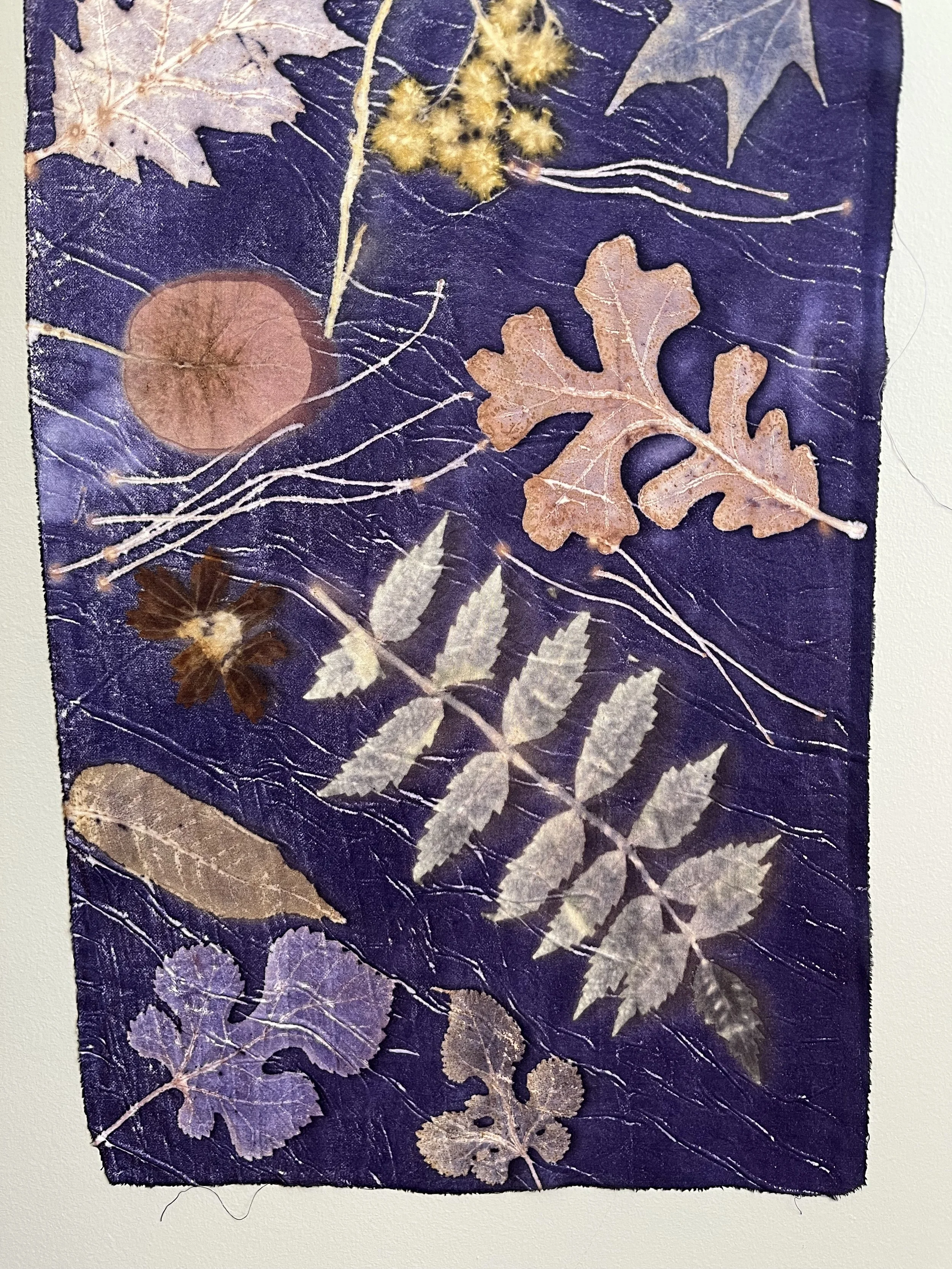
Scarf:
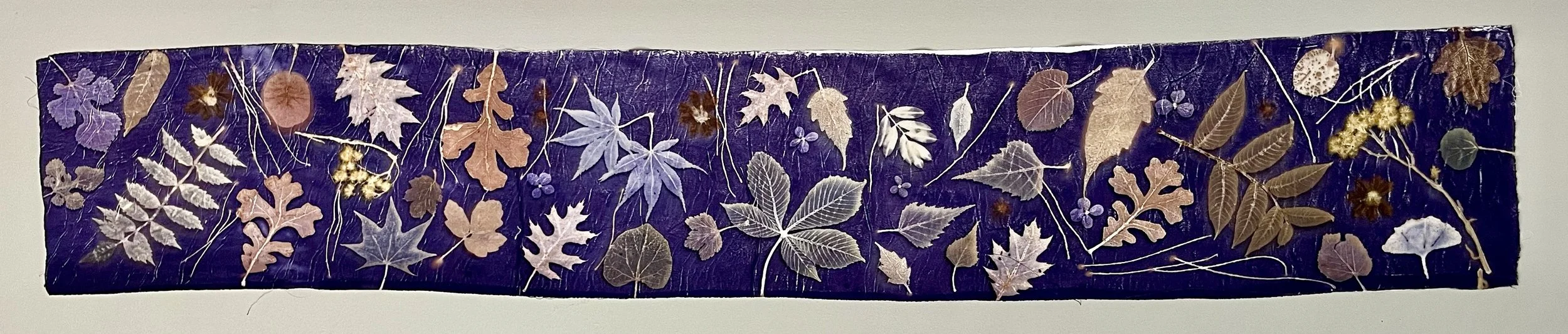
Silk Habotai 10mm.
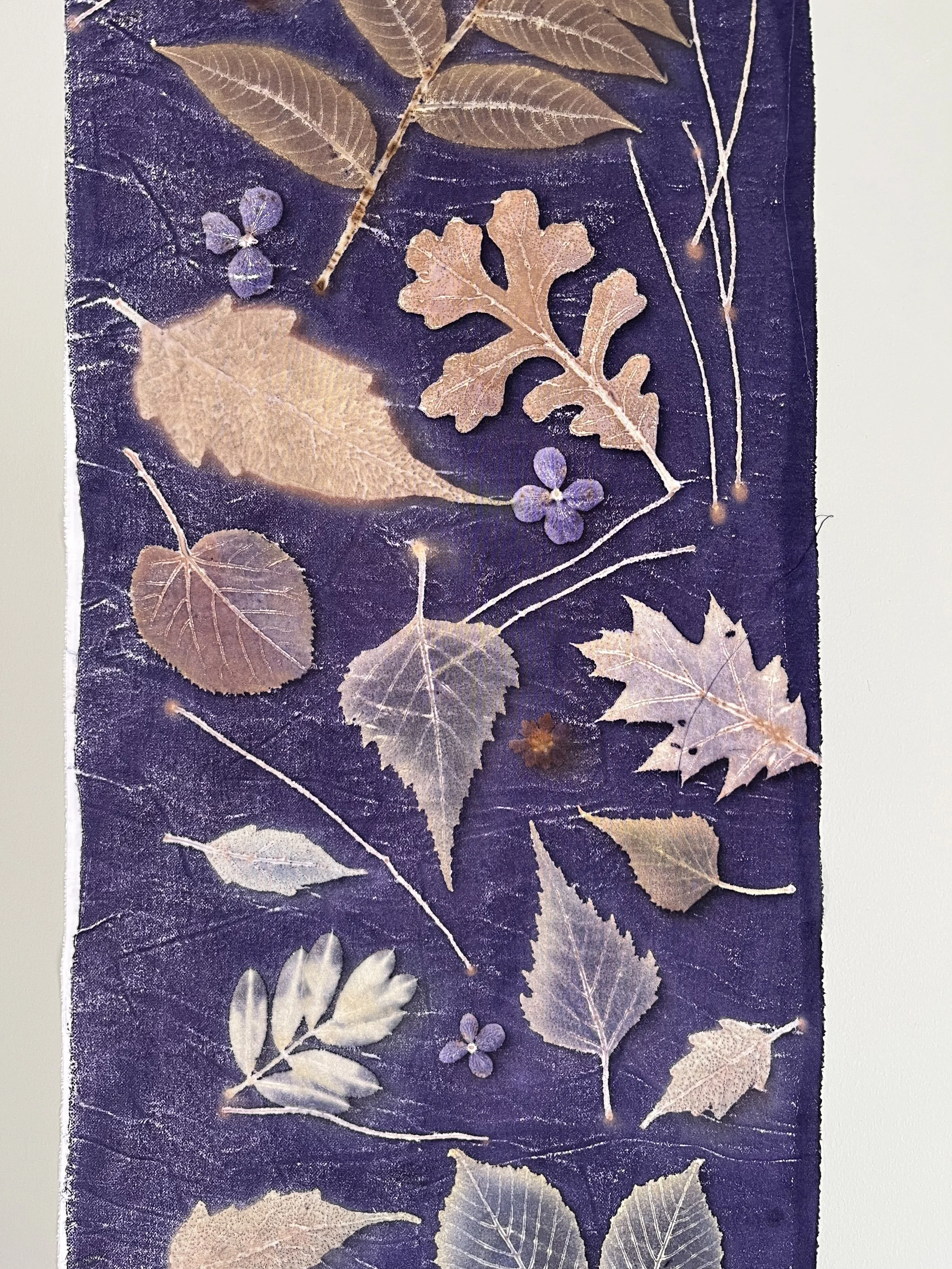
Target extra Alum + Iron (more iron so that turns the purple to blue)
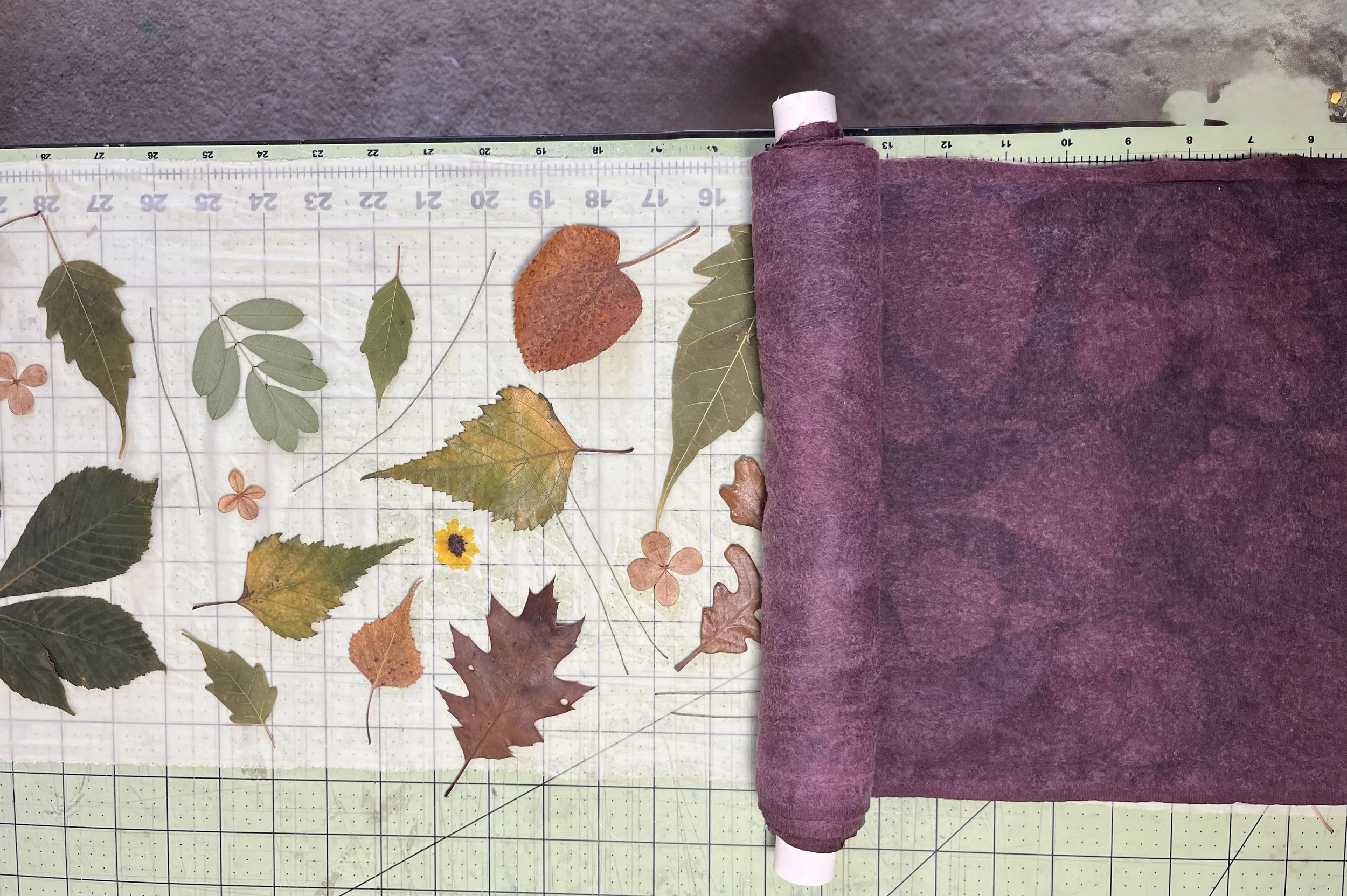
Blanket: Thick flannel, logwood dye
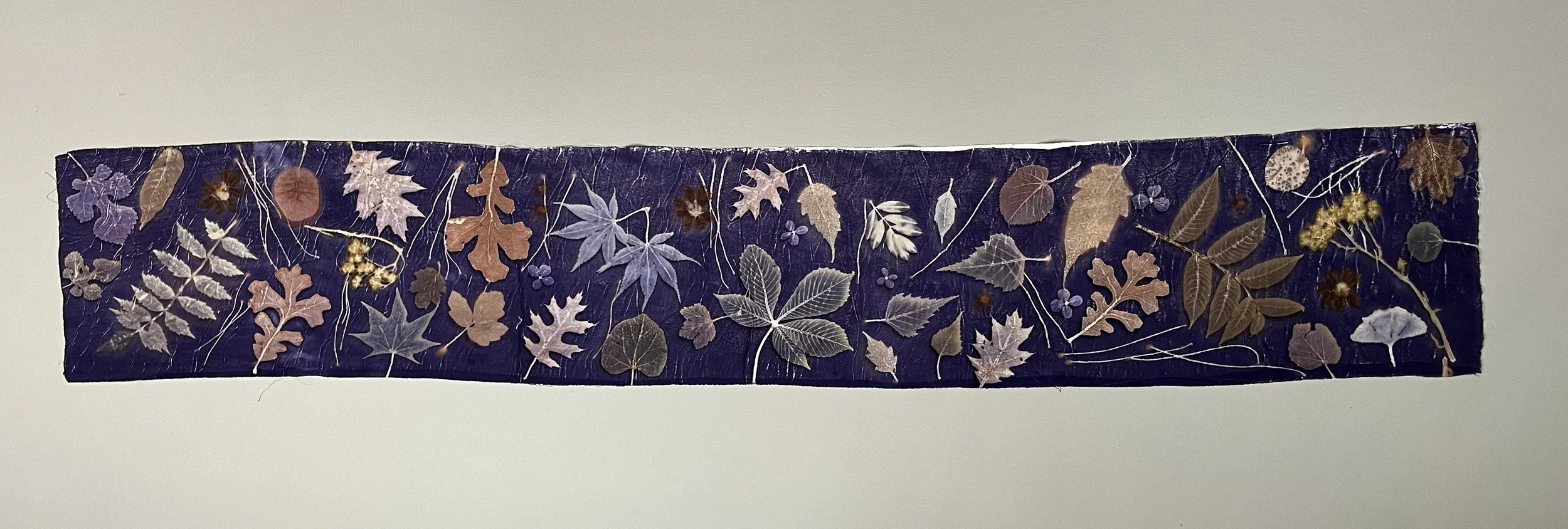
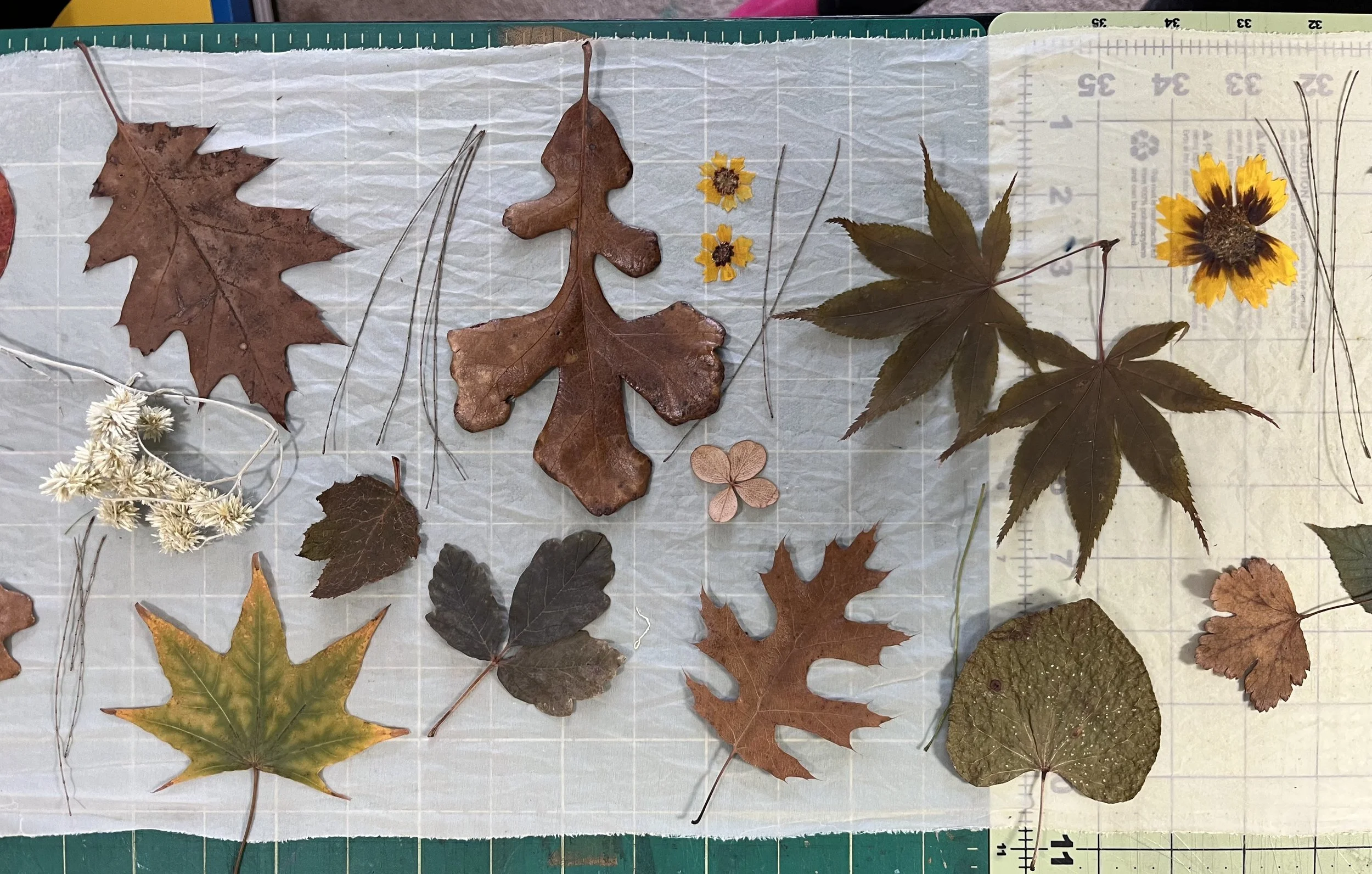
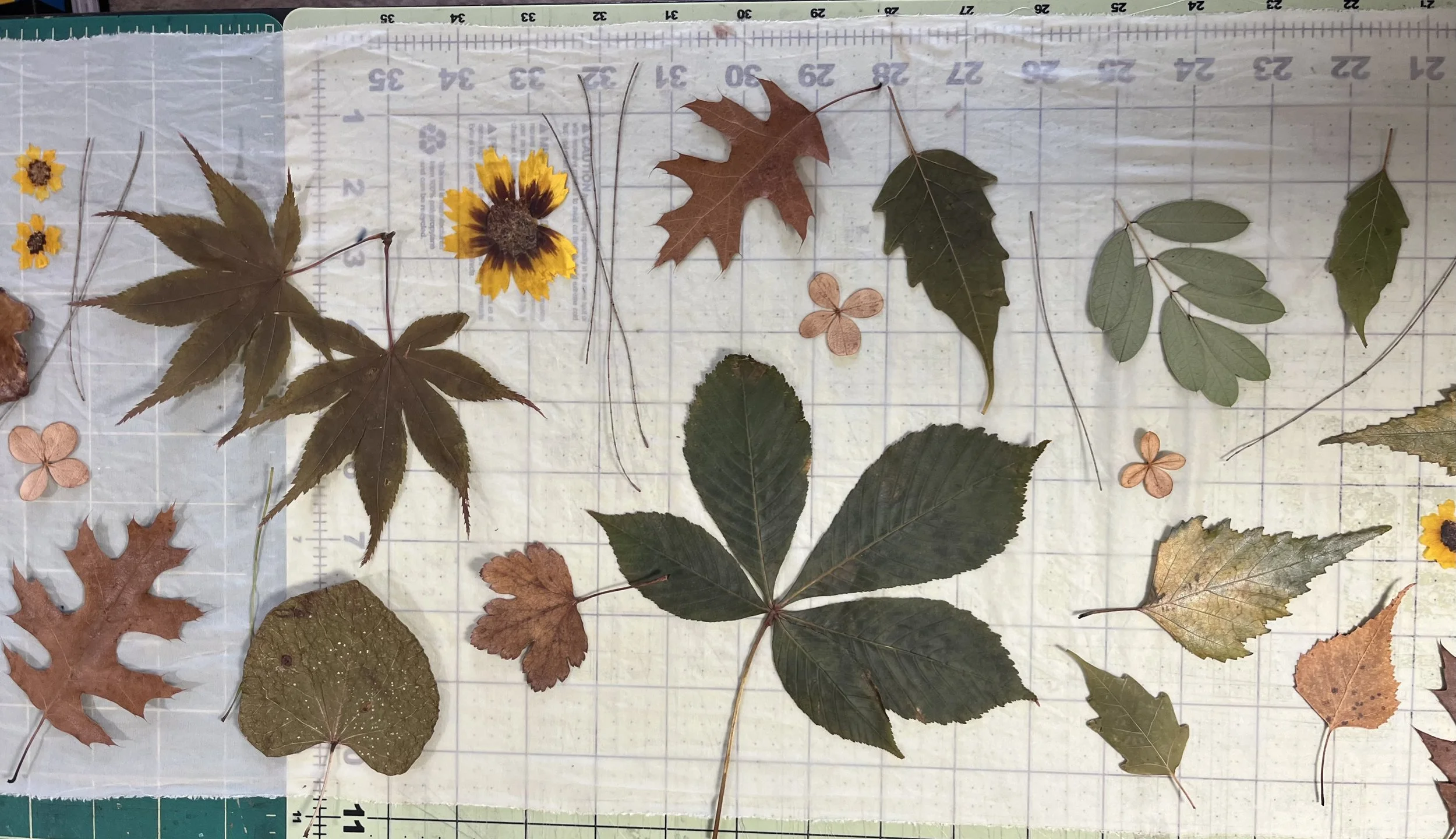
Mulberry, oak, marcela, hydrangea leaves and flowers, sweet gum, sumac, black walnut, ginkgo, birch, Japanese maple, casuarina, linden, smoke bush, horse chestnut, coreopsis.
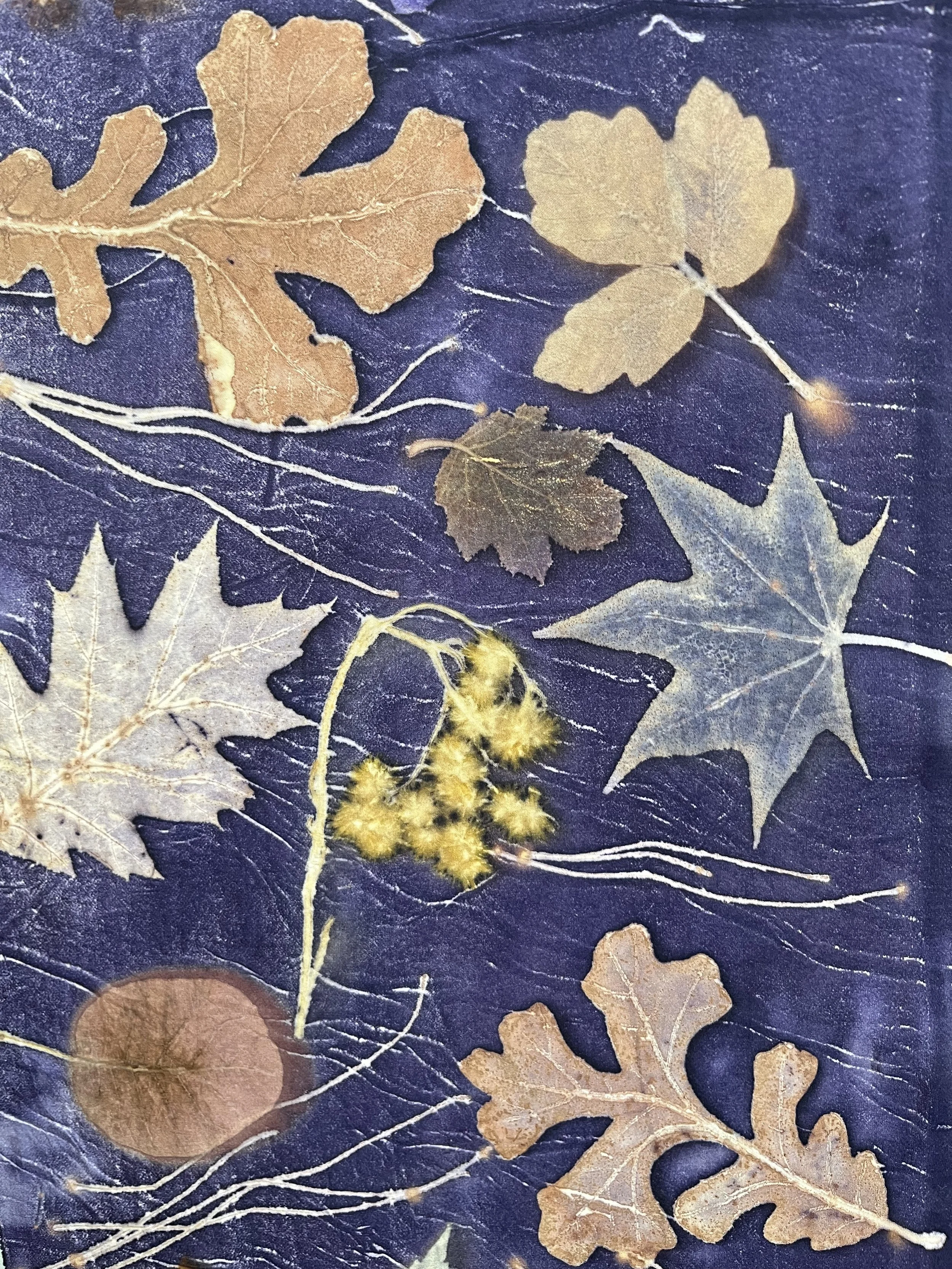
Scarf:
Raw Silk
Target extra Alum + Iron (more iron so that turns the purple to blue)
Blanket: Thick flannel, logwood dye
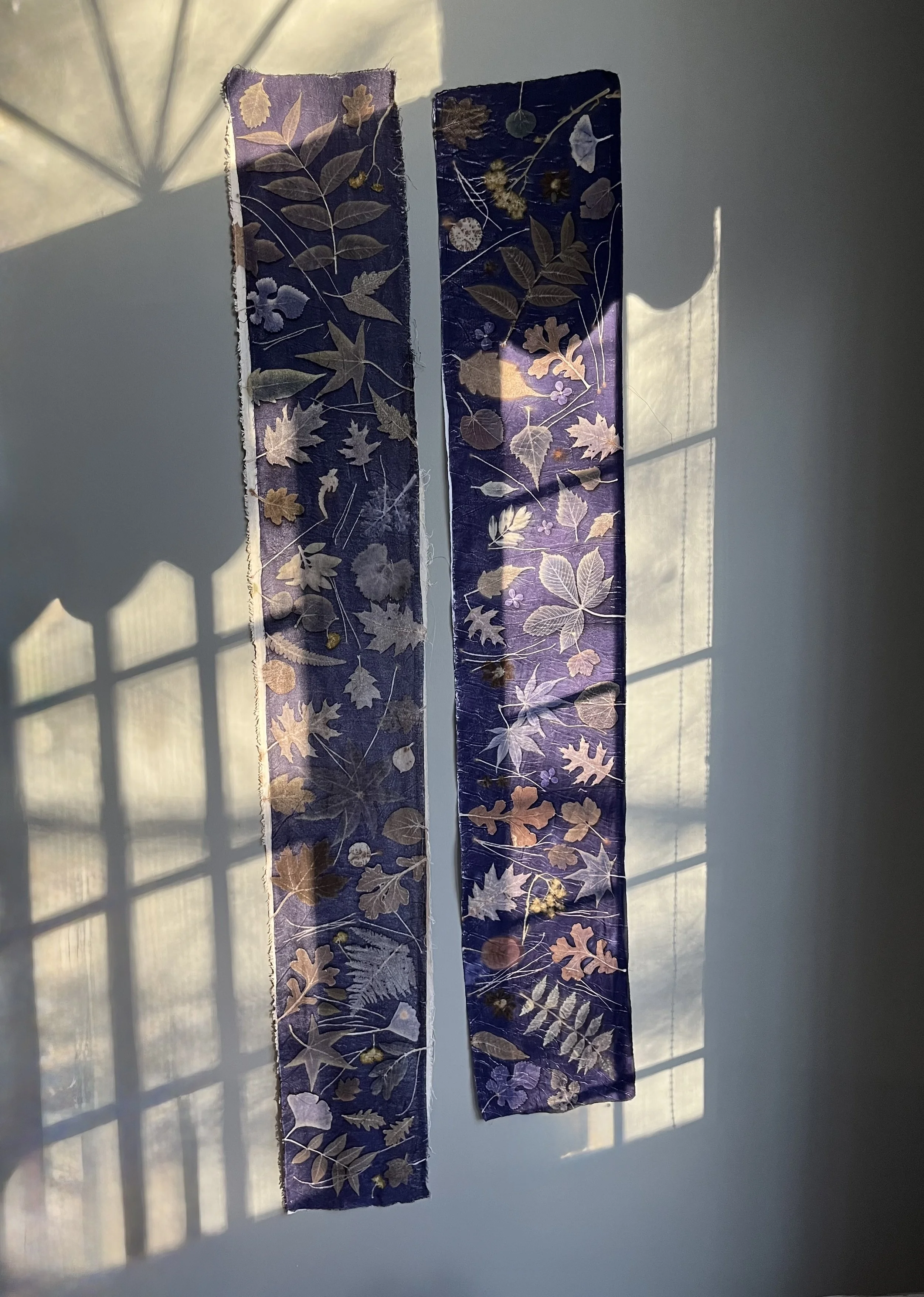
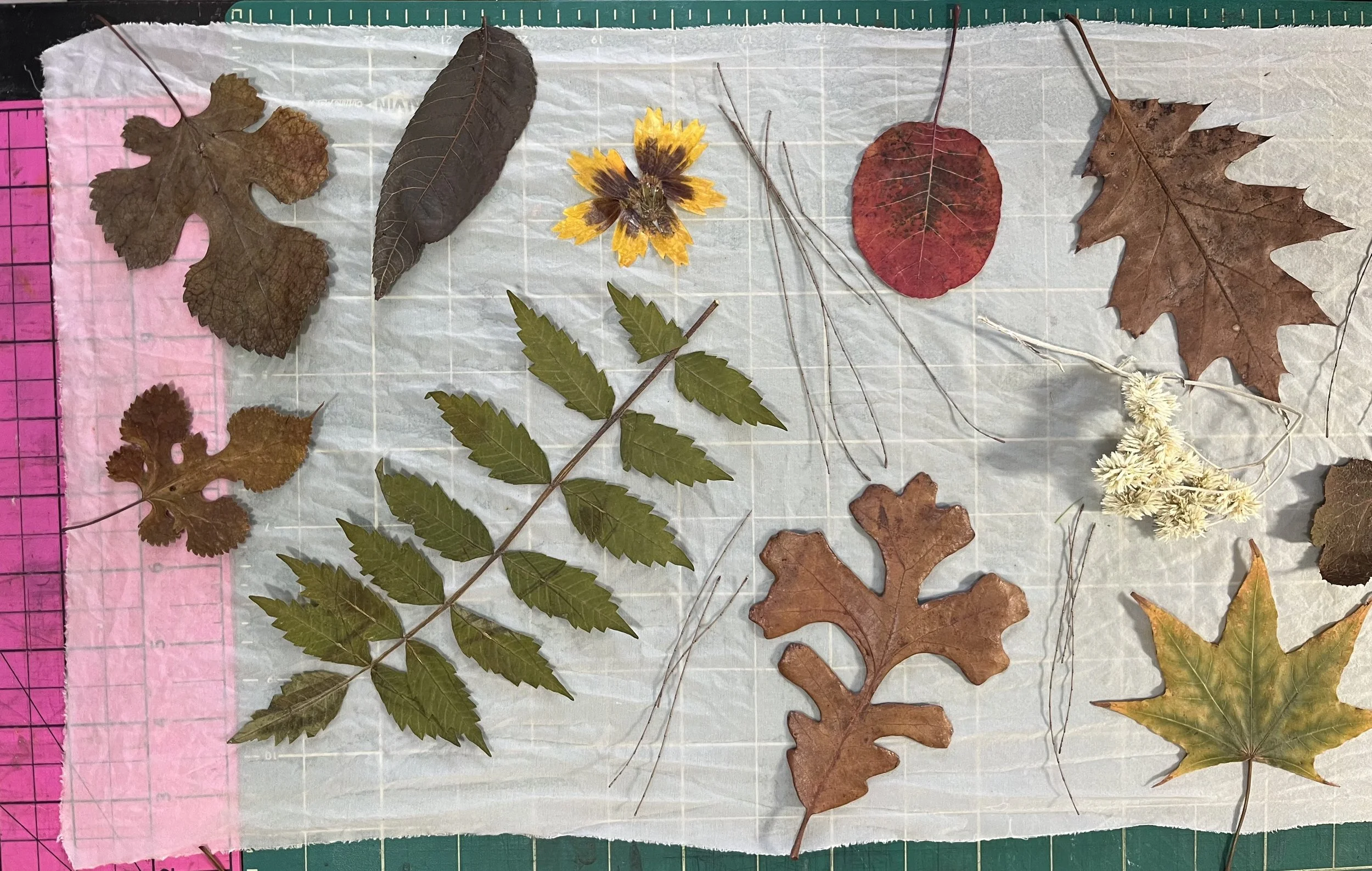
Mulberry, oak, marcela, hydrangea leaves and flowers, sweet gum, sumac, black walnut, ginkgo, birch, Japanese maple, casuarina, linden, smoke bush, horse chestnut, coreopsis, ferns, grape, ricinus, silver maple.